The Best Push Walkers for a Baby Learning to Walk
Four push-behind walkers with no seat and no wheels doing the carrying, chosen against the standard that exists because the seated kind needed one.
- Writer, standards and the recall record
- Sep 18, 2026
- 12 min read
4 products compared
In this guide
The word "walker" covers two products that do not belong in the same aisle. One is a wheeled seat that carries a baby who cannot yet walk, and it can move faster than a caregiver can react: HealthyChildren.org, the American Academy of Pediatrics' consumer site, puts the figure at more than three feet in a single second. The other is a frame a baby holds onto and pushes with their own two feet, at whatever speed their own balance allows. The AAP has called for a ban on the manufacture and sale of the first kind. The play equipment guide covers that case in full. This list is about the second kind, and none of the four picks below has a seat.
The distinction is not cosmetic, and the injury record backs it even for the seated products that meet the current mandatory standard. A 2009 Consumer Product Safety Commission rulemaking filing on infant walkers traces what happened after a stair-fall provision was added to the voluntary ASTM standard the mandatory rule later adopted: from 1994 to 2008, estimated walker-related injuries fell 88 percent. That is a real and significant improvement, and it still describes a product built around the possibility of a baby falling down stairs in a seat on wheels. A push walker has no seat to fall in. The baby's own legs carry the weight and set the top speed, so the worst realistic outcome is a stumble onto a padded frame.
The picks
$47.99
Price checked Sep 18, 2026
VTech Sit-to-Stand Learning Walker
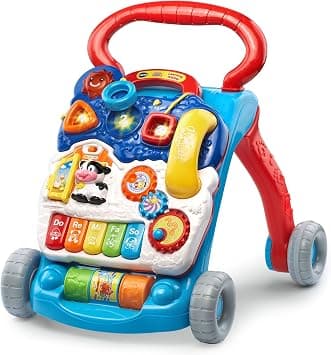
The activity panel detaches and works on the floor for a baby who can sit but is nowhere near pulling to stand, then clips back onto the walker frame for the months after. That two-stage design is the reason it is the most reviewed learning walker on the market by a wide margin. It is also the only pick here with lights, sound and buttons, which is a real trade-off against the quiet picks below.
We may earn a commission on this link. It never changes the ranking.
- From
- Panel alone from sitting age, walker mode once pulling to stand
- Peak use
- 9 to 18 months
- Power
- Batteries required
- Seat
- None
What works
- Works before pulling to stand, as a floor panel, and after, attached to the walker
- No seat: the frame is pushed from behind on the child's own feet
- Five light-up buttons, a shape sorter and gears give it the widest activity range on this list
- Among the best-reviewed products in the category
What to know
- Runs on batteries, and the lights and sound are the opposite of the quiet toys the rest of this site favors
- The detachable panel is small-parts territory for an older sibling. Check it against the choking standard before it is loose on the floor
- Plastic construction, not built to be handed down the way a wooden walker is
$29.97
Price checked Sep 18, 2026
Radio Flyer Push & Pull Walker Wagon
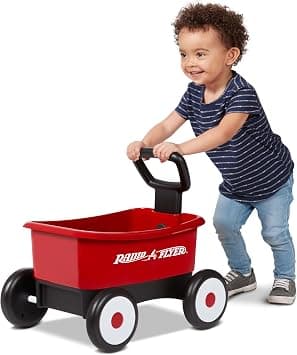
A locking handle holds it rigid for pushing while a baby is still finding their balance, then unlocks so an older sibling can pull it as a wagon once the walking is no longer the point. That second life is what makes thirty dollars a genuinely good price here, since most toys at that price are finished in four months.
We may earn a commission on this link. It never changes the ranking.
- From
- Once pulling to stand, usually 9 to 12 months
- Peak use
- 10 to 24 months
- Power
- None
- Seat
- None
What works
- Lowest price on this list by a wide margin
- Converts from a stable push walker to a pull wagon, so it does not stop earning its floor space once walking arrives
- No seat, no batteries, nothing to charge
- Works indoors on hard floors and carpet alike
What to know
- Plastic build, not the heirloom object the wood picks below are
- The locking handle is the whole safety feature. Check that it is actually engaged before handing it over
- No activity panel, so it offers nothing to do once the child stops walking behind it
$72.00
Price checked Sep 18, 2026
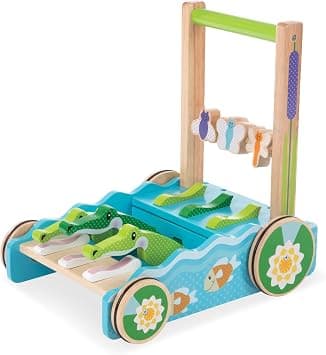
Melissa & Doug First Play Chomp and Clack Alligator Push Toy and Activity Walker
Wood, a fixed activity panel and wheels that clack as they turn, which is the alligator's whole gimmick and the only sound it makes. For a house that already avoids battery toys on the best first toys list, this is the push walker that does not break that rule.
We may earn a commission on this link. It never changes the ranking.
- From
- Panel play from sitting age, walking once pulling to stand
- Peak use
- 9 to 18 months
- Power
- None
- Seat
- None
What works
- No batteries: the only sound is the mechanical clack of the wheels turning
- Wood construction, sturdier than the plastic picks and likely to survive a second child
- Fixed activity panel with beads, gears and a spinner gives it something to do before walking starts
What to know
- Most expensive plastic-free pick, and more than double the Radio Flyer wagon above
- The activity panel is fixed rather than removable, so it cannot be used separately on the floor the way the VTech panel can
- Heavier than the plastic options, which matters on a hardwood floor with a toddler pushing hard
$89.00
Price checked Sep 18, 2026
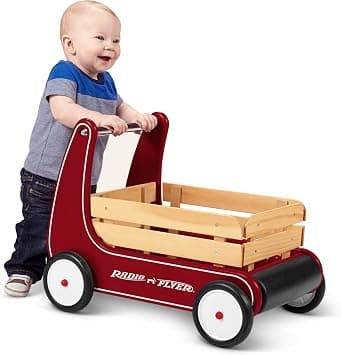
Radio Flyer Classic Walker Wagon
Resistance clickers on the wheels slow it down for a baby who is still unsteady, and a furniture bumper protects the walls and the baby's fingers from both. Underneath the walking feature it is a genuine wooden wagon with removable side panels, which is why it is the pick that is still in use as toy storage two years after the walking milestone it was bought for.
We may earn a commission on this link. It never changes the ranking.
- From
- Once pulling to stand, usually 9 to 12 months
- Peak use
- 10 months to 4 years, as a wagon after walking
- Power
- None
- Seat
- None
What works
- Resistance clickers control speed for a still-unsteady walker, unlike a free-rolling wagon
- Furniture bumper protects walls and small hands on contact
- Wood body with removable side panels doubles as toy storage well past the walking stage
- The most versatile second life of anything on this list
What to know
- Most expensive pick here, at nearly triple the Radio Flyer push walker above
- Heavier and larger than the other three, which matters in a small apartment
- Overkill if all you want is a few months of push-walking practice
The comparison, in one table
| Walker | Price | Best for | Power | Seat |
|---|---|---|---|---|
| VTech Sit-to-Stand Learning Walker | $47.99 | Longest useful window, floor to walking | Batteries | None |
| Radio Flyer Push & Pull Walker Wagon | $29.97 | Cheapest real pick, converts to a wagon | None | None |
| Melissa & Doug Chomp and Clack Alligator | $72.00 | No battery, no screen-adjacent noise | None | None |
| Radio Flyer Classic Walker Wagon | $89.00 | Best second life as storage | None | None |
Who each one is wrong for
The VTech is wrong for a house already committed to no batteries and no screen-adjacent noise. That rule is explained in do developmental toys do anything, and if it applies here, the Melissa & Doug pick or the Radio Flyer wagon are the alternatives that don't fight it.
The Radio Flyer Push & Pull Walker Wagon is wrong as a first toy purchase if there is nothing else planned for the months after walking arrives. It is genuinely the cheapest good option, but a family that wants one object to last from nine months to four years should look at the Classic Walker Wagon instead.
The Melissa & Doug alligator is wrong on price if the only goal is a few months of push-walking practice. Seventy-two dollars for a fixed activity panel and a walking frame is a real premium over the thirty-dollar Radio Flyer, mostly for the wood and the quiet.
The Radio Flyer Classic Walker Wagon is wrong in a small apartment. It is the heaviest and largest pick here, and its main advantage, becoming a toy-storage wagon for years, only pays off in a home with somewhere to keep it.
What is deliberately not here
Any seated, wheeled walker. The category the AAP has asked to be banned outright is covered in full in the play equipment guide, including the injury numbers and the federal standard that governs the ones still sold. Nothing that fits that description belongs on a buying list, and nothing here does.
Anything graded for an age the child is not yet at. A push walker bought before a baby is already pulling to stand is a toy waiting in a corner, the same trap covered for other toys in toys by development stage. Buy at the stage, not ahead of it.
Recall note: the other kind of walker
A recall in the seated-walker category is a useful reminder of why this guide draws the line where it does. A CPSC recall in December 2025 covered about 2,650 Uuoeebb infant walkers sold on Amazon.com by Hunan Suihuo E-commerce, trading as BaoD, between December 2024 and September 2025 at $60 to $90. The walkers fit through a standard doorway and failed to stop at the edge of a step, and the leg openings let a child slip down far enough for the head to become entrapped. Both are violations of the mandatory federal standard for infant walkers. CPSC had already issued a public warning about the product in November 2025 before the recall was announced.
None of that applies to anything on this page, and the distinction is the entire point. An infant walker is a seat on wheels that carries a baby who cannot yet walk, which is what makes a doorway and a staircase dangerous in combination. A push walker has no seat: the child is standing on their own feet, supporting their own weight, and moving at the pace their own legs set. The recalled product failed a standard that no push walker is even tested against, because they are different objects. Full notice: Uuoeebb Infant Walkers Recalled.
When to buy
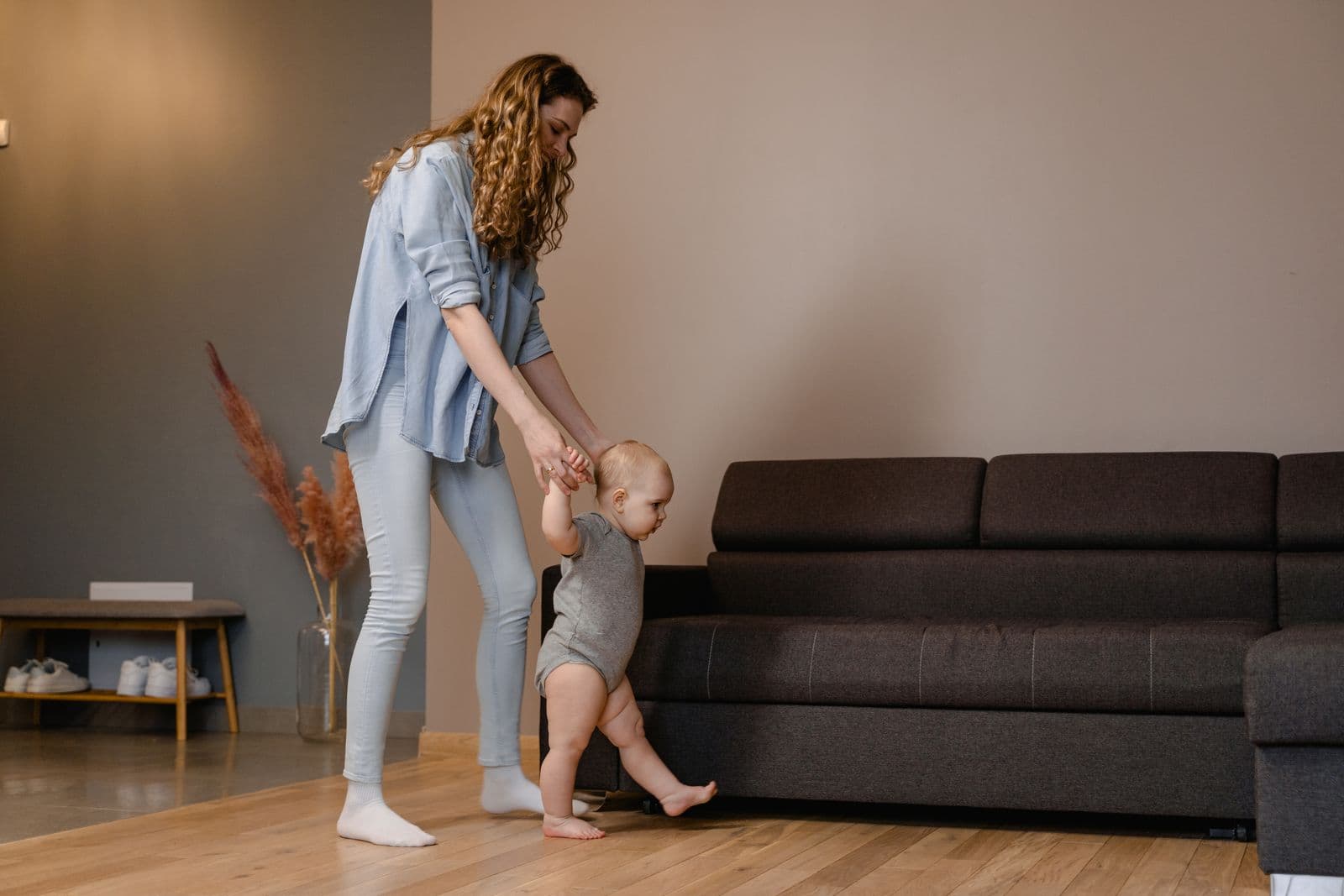
The signal to buy any of these is pulling to stand at furniture, not a birthday on the calendar. Before that point a push walker is dead weight a baby cannot use. After it, the walker gives the same upright, forward-leaning practice the furniture already does, with a handle built for small hands and wheels that move at the pace the child sets.
Questions people actually ask
Is a push walker safer than a traditional baby walker?
Yes, structurally. A traditional infant walker is a wheeled seat that can carry a baby toward stairs faster than an adult can react, which is the hazard the AAP has asked to have the product banned over. A push walker has no seat: the baby's own legs carry the weight and set the speed, so there is no mechanism for the walker itself to carry the baby somewhere dangerous.
Does a push walker help a baby walk sooner?
There's no strong evidence either way, and the same caution applies here that applies to traditional walkers: they do not appear to accelerate the underlying motor milestone. What a push walker offers is a way for a baby who is already pulling to stand to practice bearing weight and moving forward, at their own pace, rather than a shortcut to walking earlier.
What age should a baby start using a push walker?
Once they are already pulling to stand at furniture, which is commonly somewhere between 9 and 12 months, though it varies by child. Buying one earlier just means it sits unused, since a baby who cannot yet pull to stand has no way to use the handle.
Are the wheels on a push walker dangerous on stairs?
A push walker cannot carry a baby down stairs the way a seated wheeled walker can, because the baby's own feet are on the ground the whole time. A stair gate is still the right call in any home with stairs and a baby who is newly mobile on their feet, on a walker or off one.
Is it worth buying an electronic push walker over a plain one?
Only if the lights, sounds and detachable activity panel matter more than the quiet, battery-free preference this site argues for elsewhere. The VTech pick here does more across a longer age range than the quiet options; the Melissa & Doug and Radio Flyer picks do less, more quietly, for less money.
Sources
As an Amazon Associate we earn from qualifying purchases. We earn a commission on some links, at no extra cost to you. It never changes which products we recommend or the order they appear in. Full disclosure

Who wrote this
Writer, standards and the recall record
Dan Whitfield writes the standards side of BabyGearSearch: what a certification actually covers, what the CPSC recall database says about a brand, and what the one-star reviews agree on six months in. He is not a clinician and does not write as one. His job is to read the standard rather than the marketing page, quote the real number, and name the limit the packaging skipped.
More from DanThe standard
How this guide was built
- Manufacturer specification sheets and warranty terms, read in full rather than summarised from a listing.
- The federal safety standard the product is certified to, plus anything NHTSA, the AAP or the CPSC has published on it.
- Owner reports at volume, including the one-star reviews, which is where failure modes live.
- Every price checked against the live listing on the date printed beside it.