Do Developmental Toys Do Anything? What the Research Found
The best-known trial on this compared electronic toys with blocks and books, and the toys that talk came last. What the finding says, and what it does not.
- Writer, standards and the recall record
- Feb 2, 2026
- Updated Jun 26, 2026
- 8 min read
In this guide
Walk down the toy aisle and everything under a year old is described as developmental, educational or brain-building. Very little of it has anything behind those words, and one of the few pieces of research that speaks to the question directly found the opposite of what the packaging implies.
Here is what that study did, what it found, and the more useful conclusion underneath it.
The study
A 2016 paper in JAMA Pediatrics looked at what happens to parent-infant communication depending on which toys are in the room.
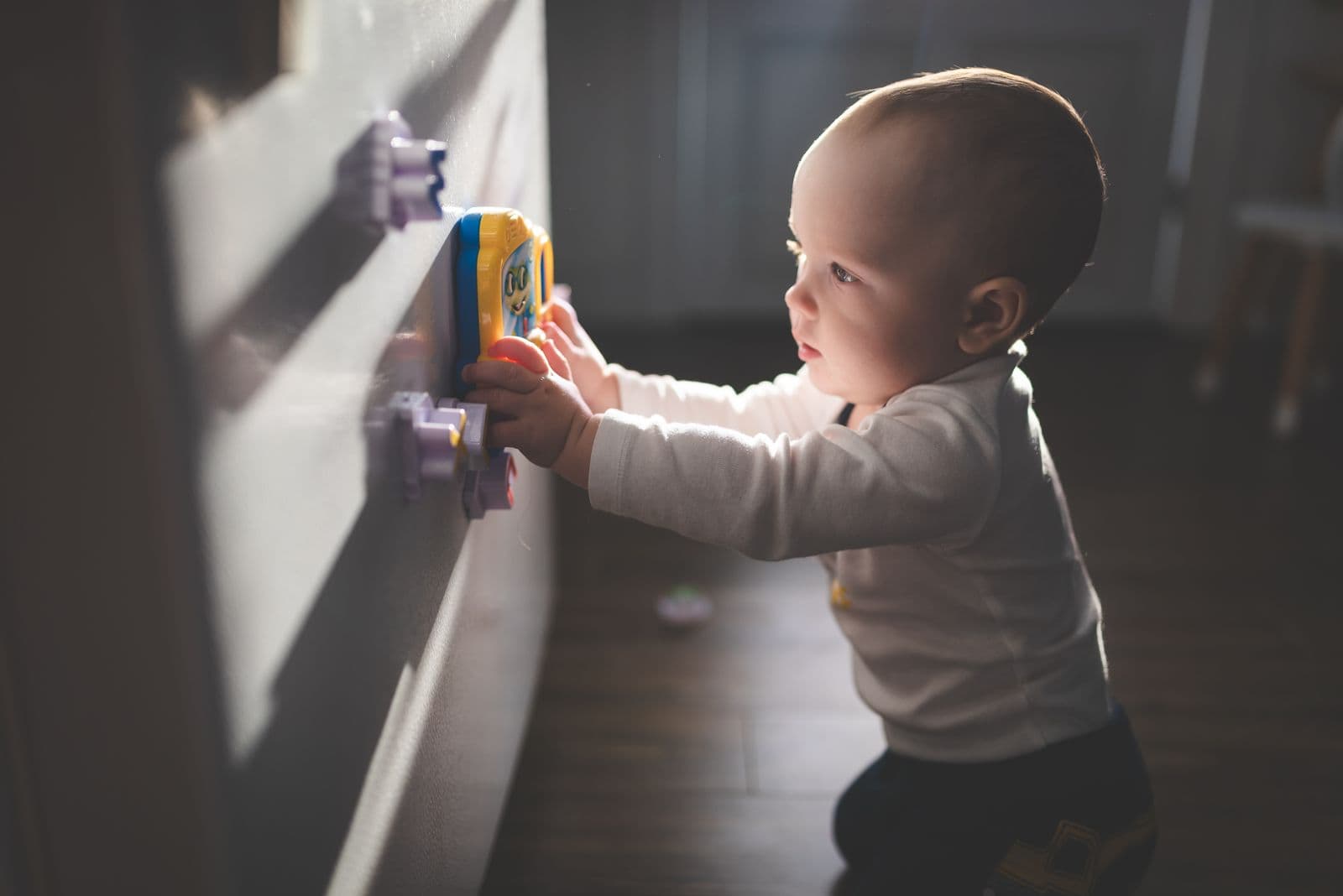
Twenty-six parent-infant pairs, with infants aged 10 to 16 months, were recorded in 15-minute play sessions at home. Each pair played with three sets of things: electronic toys, meaning a baby laptop, a talking farm and a baby phone; traditional toys such as blocks and puzzles; and books.
Across the measures of parent-infant verbal interaction, electronic toys came last. Playing with them was associated with less adult talk, fewer conversational turns and fewer of the specific content words the toys were nominally teaching. Books produced the most, with traditional toys in between.
What the finding actually means
The mechanism is not that electronic toys damage anything. It is that they occupy the role the adult would otherwise have.
When a toy names the colours, counts the shapes and sings the song, the job of narrating play is already taken. The parent watches instead of talking, and the child hears a recording instead of a conversation. Language development in the first two years is driven by responsive back-and-forth with a person, and a device that talks is not doing that, because it cannot respond to what the child actually did.
A block has no opinion, so somebody has to supply the words. That is the whole effect.
The limits, which matter
This is a small study and it should be described as one. Twenty-six pairs is a modest sample, the sessions were 15 minutes, and it measured communication during play rather than long-term language outcomes. It does not show that a child who owns a talking farm will have a smaller vocabulary at four.
What it does support is narrower and still useful: given a fixed amount of floor time, the toys in front of you change how much talking happens, and the ones that talk reduce it.
A guide that reported the headline without the sample size would be doing the thing this site exists not to do.
What follows for buying
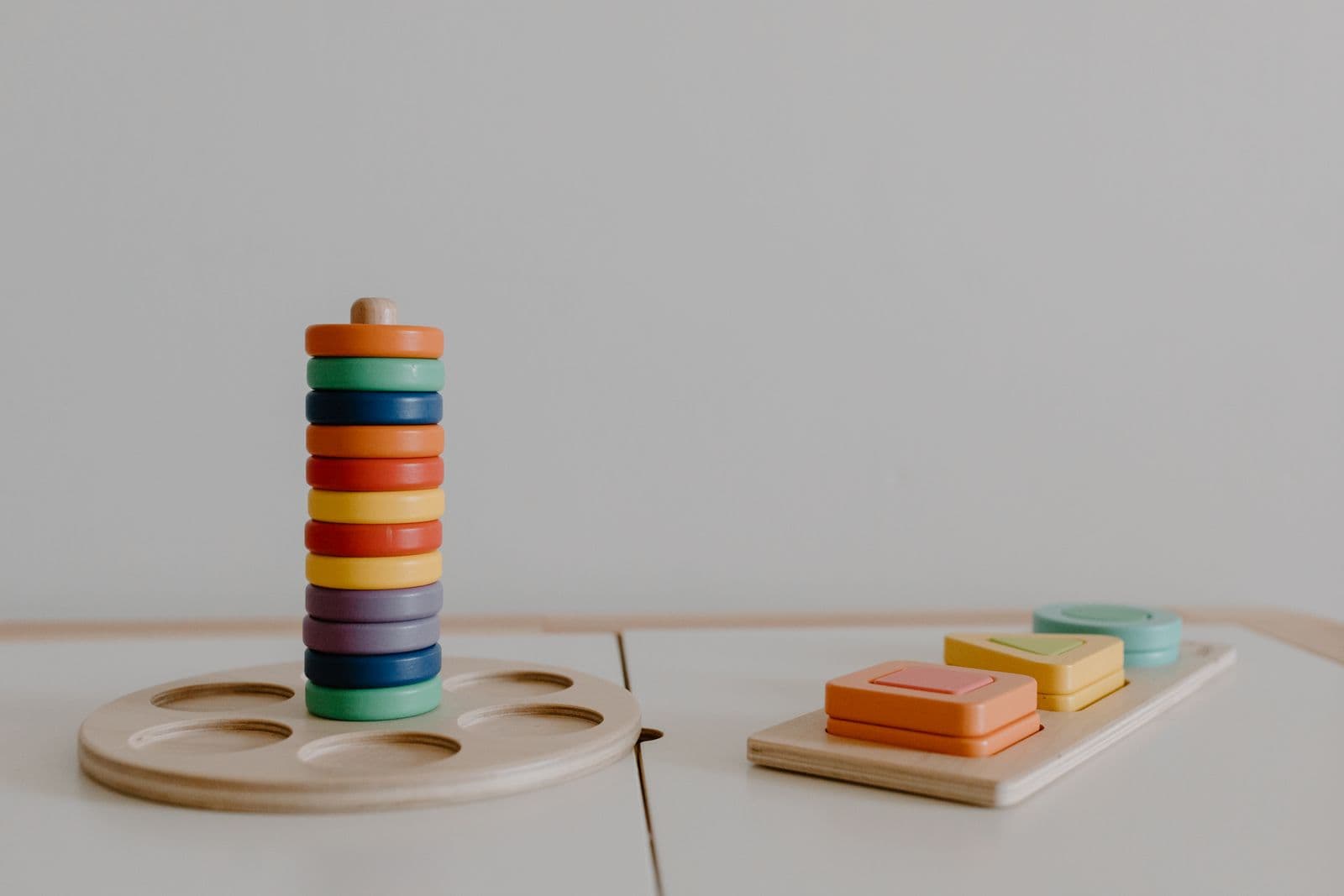
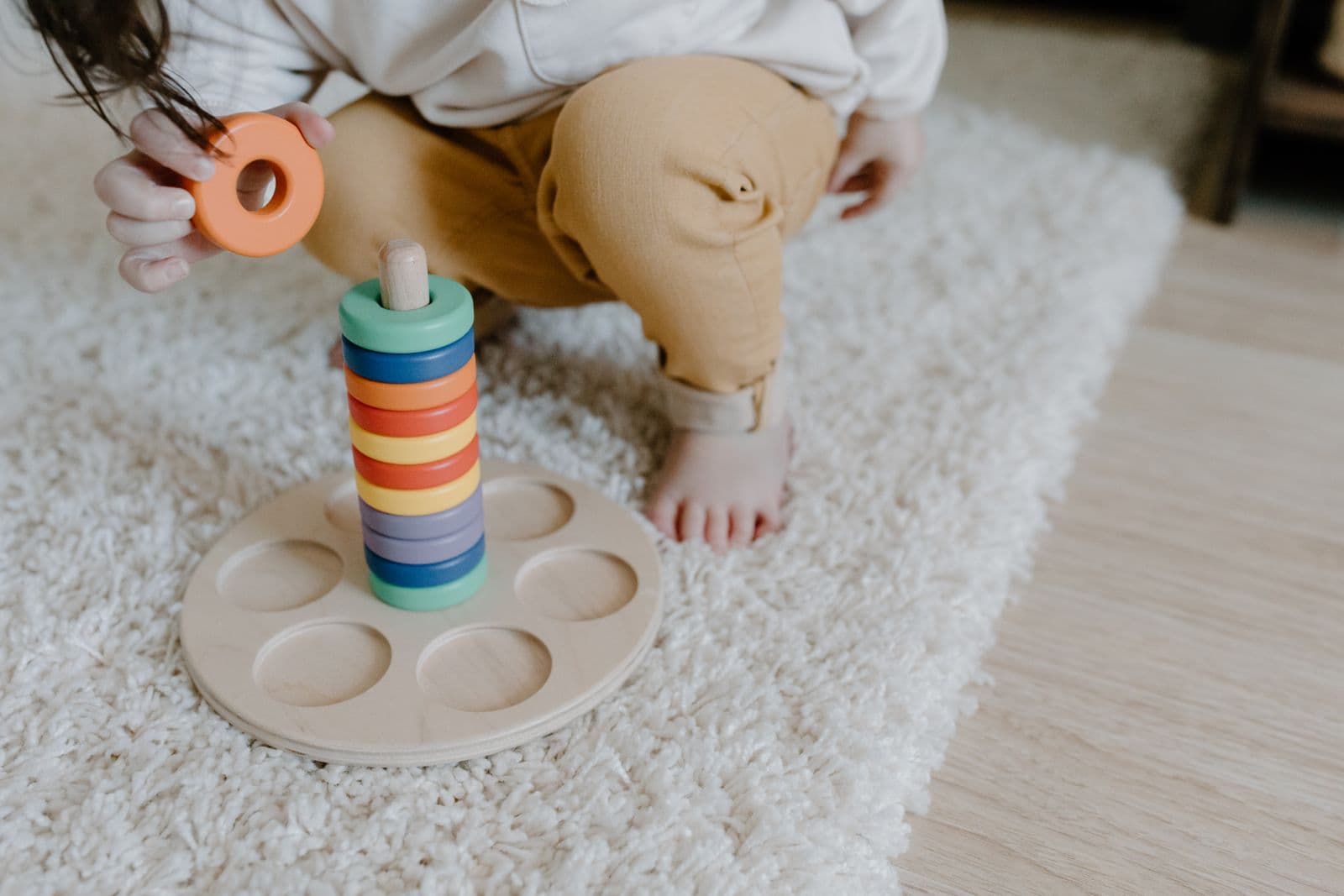
Open-ended beats prescriptive. A set of blocks can be a tower, a road, a phone or a snack. A toy with one correct action has one activity in it, and it is finished when the child works out what the action is.
Quiet beats loud. Not for peace, though that is a benefit. Because a quiet toy leaves the talking to you.
Fewer, rotated, beats more. A small number of toys available at a time, swapped every couple of weeks, produces more sustained play than a full toy box. A child facing thirty options tends to sample all thirty.
The best toy in the first year is usually a person. Faces, voices, hands and being carried around a room while things are named is what the evidence supports most strongly. This is convenient, since it is free.
Household objects work. A wooden spoon, a set of measuring cups, a cardboard box and a muffin tin cover most of what a first-year toy claims to do.
Why the claim is allowed at all
It is worth understanding why a toy can say "developmental" on the box without anybody checking, because the answer explains the whole aisle.
Toy regulation in the United States is about physical safety rather than efficacy. A toy sold here must meet ASTM F963, the consumer safety specification for toys, which 16 CFR Part 1250 makes mandatory. That standard covers the things that hurt children: small parts and choking hazards, sharp points and edges, lead and phthalate limits, magnet strength, battery compartment security, sound pressure levels, and the age grading on the label.
What it does not cover, and was never meant to, is whether the toy teaches anything. There is no regulator assessing developmental claims on toys, no test a product passes to earn the word, and no consequence for using it. So the word costs nothing and appears on everything.
That is not a scandal. It is a category boundary worth knowing, because it tells you which claims on a toy box are load-bearing. The age grading is: it is a safety classification derived from a real standard, and the choking-hazard part of it is the reason a toy says three and up. The word "developmental" next to it is not.
The words on the box
Educational and developmental are not regulated terms and correspond to no test. Any toy can carry them.
Montessori describes a pedagogical approach and is not a certification. Some toys sold under the name reflect the principles, which are broadly about simple materials and self-directed use, and some are ordinary toys with the word printed on them.
STEM, applied to a toy for a one-year-old, is marketing.
Screen-free is a genuine and checkable property, and it is worth knowing that the AAP's media guidance advises against screen media other than video chatting for children under about 18 months. A toy with a screen is a screen.
What actually helps
The uncomfortable summary is that the interventions with real support behind them are not purchases.
Talking to the child, constantly, about what is in front of them. Reading, from early, including to babies who cannot follow a story, because the interaction is the point. Responding to what they do rather than directing what they do. Floor time with an adult who is present rather than adjacent.
None of that is on a shelf, which is exactly why the shelf is so crowded with things claiming to substitute for it.
Where this sits
For which toys are worth the space at each stage, and what a baby can actually do with them, see toys by development stage in year one, and for the five that earn their floor space longest, the best first toys. The single largest category of floor equipment, and the one with real safety guidance attached, is covered in play gyms and activity centers.
Toys that go in a crib are a separate matter, and the answer there is none, for the reasons set out in the cribs and bassinets guide. And the other thing occupying floor space in the first year is a play mat, which sits alongside the nursery essentials the room needs anyway.
Questions people actually ask
Are electronic toys bad for babies?
The study does not support that framing. What it found is that during play with electronic toys, parents talked less and there were fewer conversational turns than with blocks or books. The toy is occupying the narrating role rather than harming anything, and the effect is on the interaction rather than on the child directly.
How strong is the evidence?
Modest and worth stating plainly. Twenty-six parent-infant pairs, 15-minute sessions, measuring communication during play rather than long-term language outcomes. It is a real finding about a real mechanism and it is not proof that a talking toy costs a child vocabulary at age four.
Is Montessori certification a real thing for toys?
Not in the way the labelling implies. Montessori describes an educational approach, not a product standard, and there is no body certifying toys against it. Some products sold under the name genuinely reflect the principles and some have the word printed on the box.
What is the best toy for a newborn?
A person. Faces, voices and being carried around while things are named is what the first months are about, and high-contrast cards and a mirror are the cheap additions that do something. Almost everything else marketed for the newborn stage is bought for the parent.
Should I avoid toys with batteries entirely?
No, and a blanket rule is not what the evidence supports. The useful version is proportion: if most of what is available is quiet and open-ended, one talking toy is not the problem. If everything on the floor narrates itself, there is nothing left for you to say.
Sources
As an Amazon Associate we earn from qualifying purchases. We earn a commission on some links, at no extra cost to you. It never changes which products we recommend or the order they appear in. Full disclosure

Who wrote this
Writer, standards and the recall record
Dan Whitfield writes the standards side of BabyGearSearch: what a certification actually covers, what the CPSC recall database says about a brand, and what the one-star reviews agree on six months in. He is not a clinician and does not write as one. His job is to read the standard rather than the marketing page, quote the real number, and name the limit the packaging skipped.
More from DanThe standard
How this guide was built
- Manufacturer specification sheets and warranty terms, read in full rather than summarised from a listing.
- The federal safety standard the product is certified to, plus anything NHTSA, the AAP or the CPSC has published on it.
- Owner reports at volume, including the one-star reviews, which is where failure modes live.
- Every price checked against the live listing on the date printed beside it.