The Best Sound Machines, Judged on What Runs All Night
Five machines ranked on the things that decide whether one survives a year: a real fan, no auto-off, no app dependency, and volume you can actually control.
- Editor, gear and the arithmetic of a small home
- Apr 14, 2026
- Updated Aug 10, 2026
- 11 min read
5 products compared
In this guide
A sound machine is the cheapest thing in the nursery and one of the few that gets used every single night for years. That makes the failure modes worth more attention than the feature list, and there are only four of them.
It shuts itself off. An auto-off timer that cannot be disabled is the single most common complaint in this category, because the machine stops at 2am and the room goes quiet at exactly the moment the quiet matters. Continuous play is a real specification, not a given.
The loop is audible. A digital machine plays a recorded file on repeat. If the file is short or the seam is poorly cut, you hear the join, and once you have heard it you cannot stop hearing it. A mechanical machine has no loop at all because it is a real fan moving real air.
It needs an app, or a network. A machine that will not start without a phone is a machine that fails when the phone is dead or the router is down.
The volume steps are wrong. Many machines put their useful range inside two clicks near the bottom, so the choice is too quiet or too loud with nothing between.
Here are five ranked against those four things.
The picks
$49.99
Price checked Aug 10, 2026
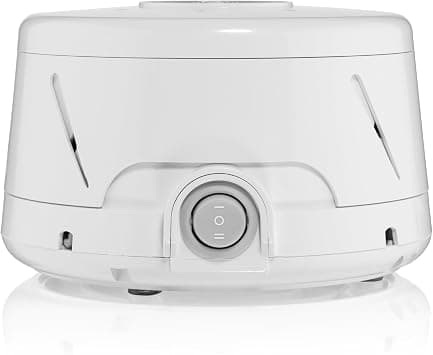
Yogasleep Dohm Classic
A real fan inside a housing, which means there is no recording, no loop and nothing to hear a seam in. It runs continuously by design because there is no timer to disable, and it works in a power cut only in the sense that nothing does, but it needs nothing else in the house to be working. The one to buy if you want to buy once.
We may earn a commission on this link. It never changes the ranking.
- Sound
- Mechanical fan, no recordings
- Timer
- None, runs until switched off
- Power
- Mains only
- Controls
- Two speeds plus tone collar
What works
- Mechanical sound from an actual fan, so there is no loop and no compression artefacts
- No timer, no auto-off, no app, no account and no firmware
- Two speeds plus a rotating collar for tone, which gives finer control than most digital volume steps
- The design has been in production for decades, so parts and knowledge are easy to find
What to know
- One sound and only one, so if you want rain or ocean this is the wrong product
- The rotating collar is a fiddly adjustment in the dark until you learn it
- Mains powered with no battery, so it does not travel
- Costs more than a basic digital unit that also makes noise
$36.99
Price checked Aug 10, 2026
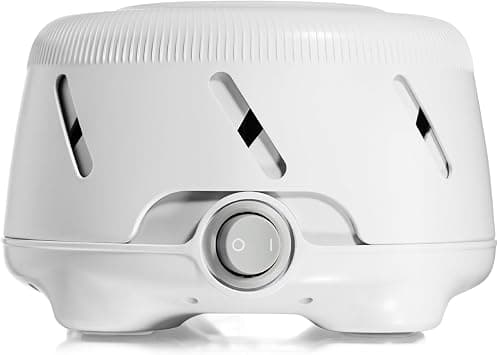
Yogasleep Dohm Uno
The single-speed version of the Classic. Same mechanical principle, same absence of loops and timers and apps, one speed instead of two and a lower price. In a small nursery the second speed is the one you were never going to use anyway.
We may earn a commission on this link. It never changes the ranking.
- Sound
- Mechanical fan, no recordings
- Timer
- None
- Power
- Mains only
- Controls
- Single speed
What works
- The mechanical fan sound of the Classic at a lower price
- Single speed means one switch, which is genuinely easier in the dark
- Smaller footprint on a crowded shelf
- Nothing to update, connect or subscribe to
What to know
- One speed, so the only volume adjustment left is where you put it in the room
- Still mains only and still a single sound
- In a large or noisy room the Classic's higher speed is the reason to spend the extra
$79.99
Price checked Aug 10, 2026
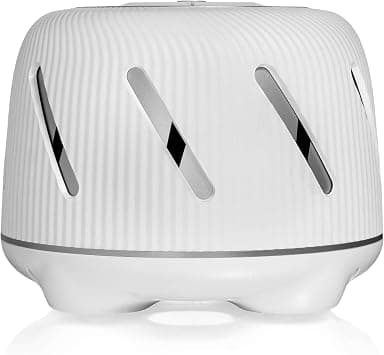
Yogasleep Dohm Connect
The Dohm with app control added. The important part is what it kept: the fan is still mechanical, so the app is a convenience layer over a machine that works without it rather than a dependency. Worth the premium only if you genuinely want to adjust it without opening the door.
We may earn a commission on this link. It never changes the ranking.
- Sound
- Mechanical fan, no recordings
- Control
- App plus physical controls
- Timer
- Optional, via app
- Power
- Mains only
What works
- Mechanical sound, so the app does not change what you are listening to
- Adjust and schedule from a phone without walking into the room
- Falls back to physical controls, so a dead phone is not a dead machine
What to know
- Thirty dollars more than the Classic for a feature many families use twice
- Adds an account and an app to a product whose main virtue is having neither
- Still one sound and still mains powered
$44.99
Price checked Aug 10, 2026
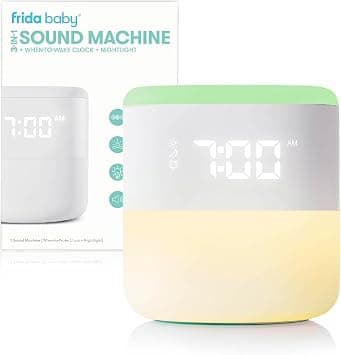
Frida 3-in-1 Sound Machine with When-To-Wake Clock and Nightlight
A digital machine that also does the two things you will want in two years, which are a night light and a colour-changing clock that tells a toddler whether it is morning. Buying one device instead of three at different times is the argument, and it is a good one for a first nursery.
We may earn a commission on this link. It never changes the ranking.
- Sound
- Digital, multiple options
- Extras
- Night light and when-to-wake clock
- Best for
- Newborn through the toddler years
- Power
- Mains
What works
- Sound, night light and a when-to-wake clock in one device, which is three purchases avoided
- The clock is the part families keep using long after the sound machine stops mattering
- Multiple sounds rather than one, which suits a room shared with an older child
What to know
- Digital sound, so it plays a loop, and how audible the seam is depends on which sound you choose
- More buttons to learn than a Dohm, and more to press by accident in the dark
- The clock is a toddler feature you are paying for during the newborn months when it does nothing
$24.99
Price checked Aug 10, 2026
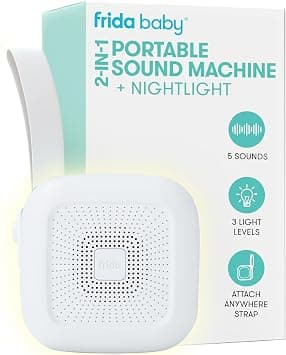
Frida 2-in-1 Portable Sound Machine and Nightlight
The cheapest thing here and the one most families end up owning as a second unit. Portable, clips to a pram or a cot rail, and it removes the argument about which parent packs the sound machine. Buy it alongside a mains machine rather than instead of one.
We may earn a commission on this link. It never changes the ranking.
- Sound
- Digital, multiple options
- Power
- Rechargeable battery
- Extras
- Night light
- Best for
- Travel and second-room use
What works
- Portable and battery powered, so naps away from home sound the same as naps at home
- Twenty-five dollars, which is the cheapest sleep intervention in this guide
- Doubles as a night light for a nappy change without turning on the main light
What to know
- Battery life is the limiting specification and it is the one to check before a long trip
- Smaller driver, so it will not fill a large room the way a mains machine does
- Digital loop, same caveat as any recorded sound
The comparison, in one table
| Machine | Price | Sound type | Runs all night | Travels |
|---|---|---|---|---|
| Dohm Classic | $49.99 | Mechanical fan | Yes, no timer at all | No |
| Dohm Uno | $36.99 | Mechanical fan | Yes, no timer at all | No |
| Dohm Connect | $79.99 | Mechanical fan | Yes, timer optional | No |
| Frida 3-in-1 | $44.99 | Digital loop | Yes | No |
| Frida 2-in-1 | $24.99 | Digital loop | Yes, battery permitting | Yes |
Who each one is wrong for
The Dohm Classic is wrong for anyone who wants a choice of sounds, because it makes exactly one and always will. It is also wrong for travel, since it has no battery and is not small.
The Dohm Uno is wrong for a large or noisy room, where the Classic's second speed is the entire reason to spend the extra thirteen dollars.
The Dohm Connect is wrong for anyone whose reason for liking a Dohm is that it has no app. Paying thirty dollars to add the thing you were avoiding is a strange purchase, and a common one.
The Frida 3-in-1 is wrong for a household that cares about the loop, and right for one that would otherwise buy a night light and a toddler clock separately in eighteen months.
The Frida 2-in-1 is wrong as a household's only machine, because it is a travel device that happens to work at home rather than the reverse.
On volume, which matters more than the model
This is the part worth getting right whichever machine you buy.
The commonly cited guidance is to keep a nursery sound machine at a moderate level and to place it away from the crib rather than beside it, on the basis that a device close to a baby's head running all night is a sustained exposure rather than a brief one. The American Academy of Pediatrics discusses noise exposure in the infant environment, and the practical version most people can act on is simple: put the machine across the room rather than on the crib rail, and set it to a level where you can still hold a conversation over it.
A phone sound-level app is not a calibrated instrument and it is close enough to tell you whether you are in a sensible range. Measuring at the crib rather than at the machine is the part people skip.
The actual numbers behind that guidance, including what two published decibel studies measured at full volume close to a crib, are in how loud is too loud, what the sound machine decibel studies found.
Where a sound machine sits in the rest of the nursery
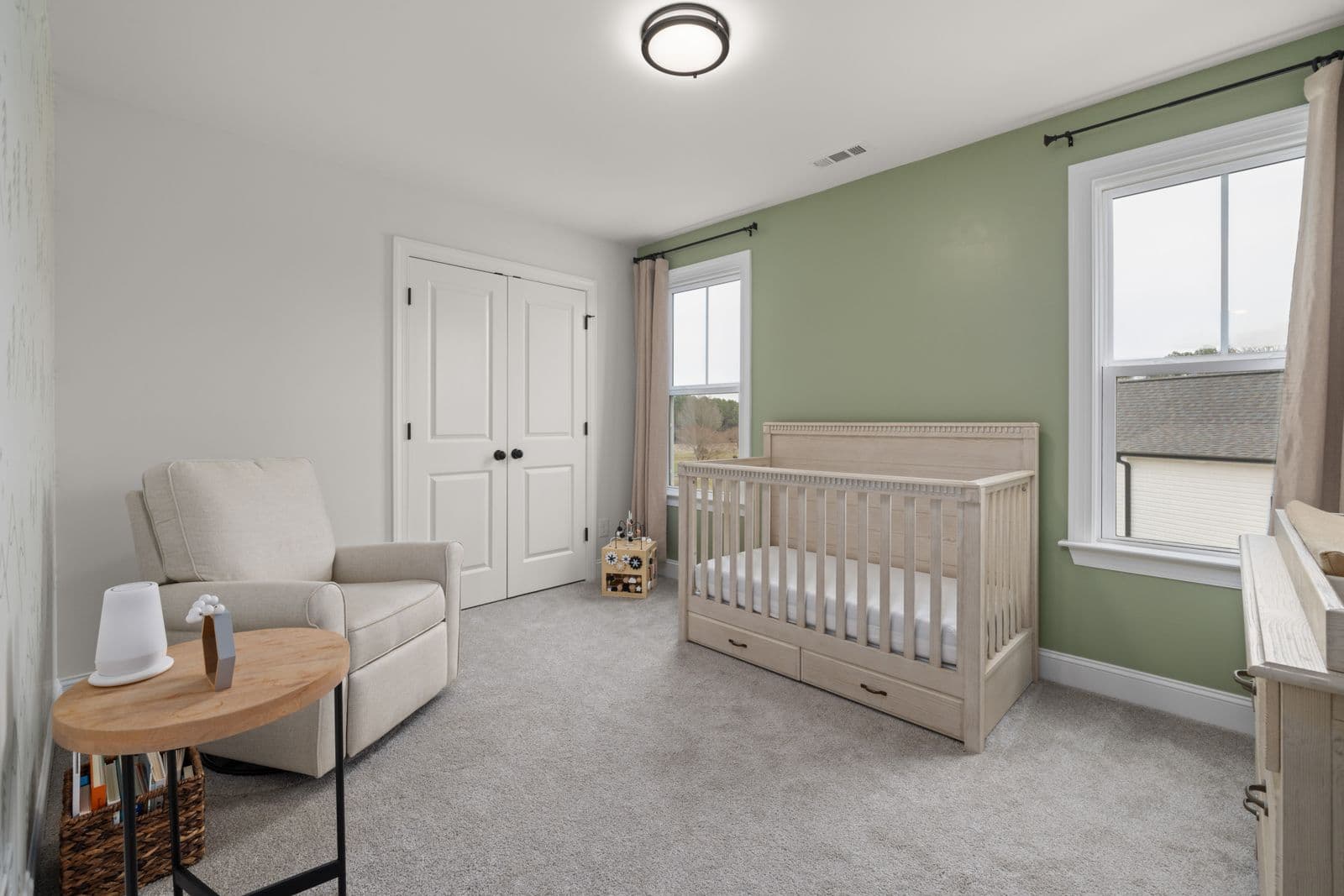
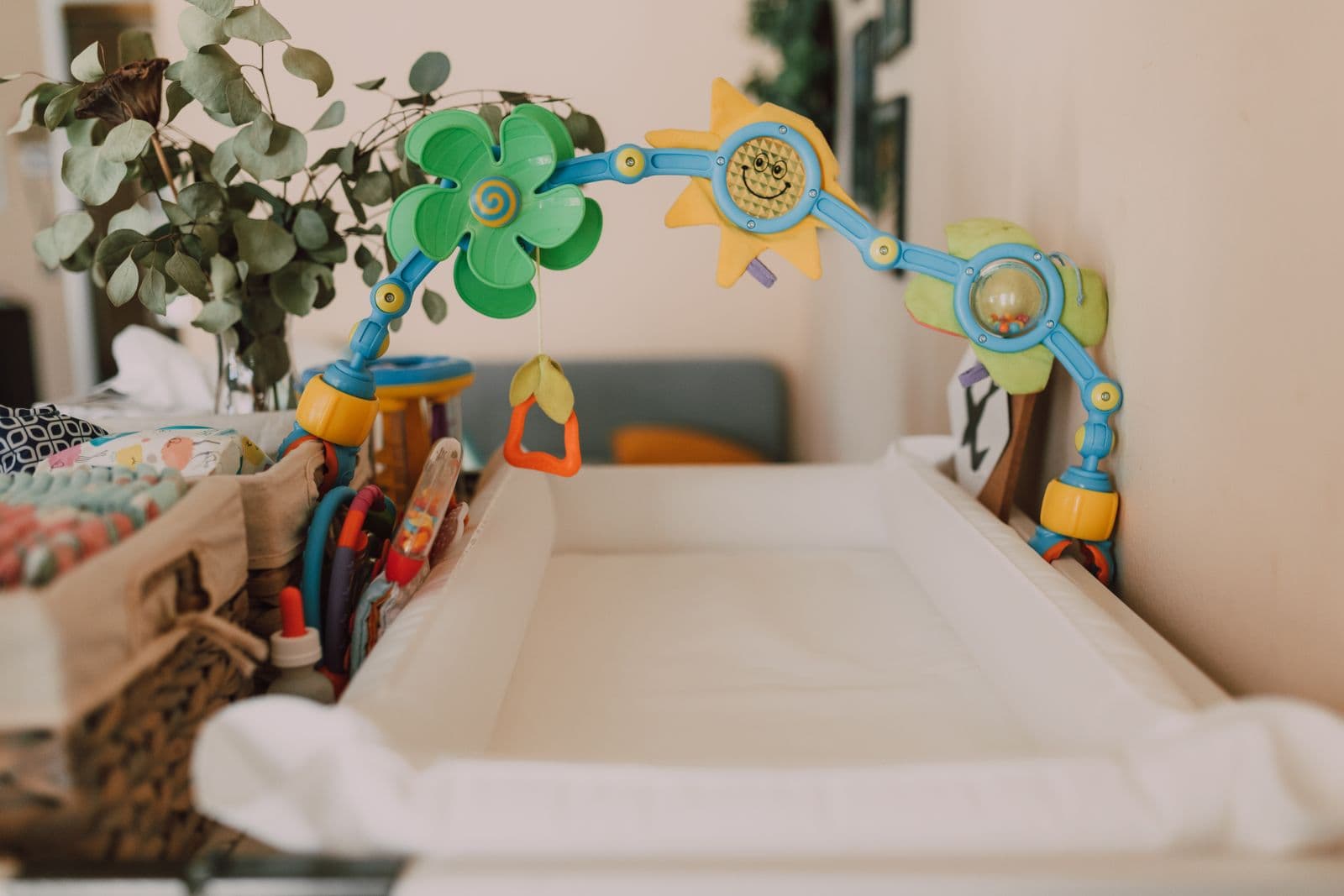
Noise is one of the three environmental levers in a nursery, and it is the cheapest. The other two are light, which is covered in blackout in a nursery, and temperature, covered in nursery temperature and overheating risk. The surface itself is the one that carries the safety evidence and is covered in the cribs and bassinets guide. The furniture question that decides how the rest of the room lays out is in changing table or dresser topper, the bin that stands beside it is in the best diaper pails, and the chair that shares the outlet the machine is plugged into is covered in the best nursery gliders and rocking chairs. What the federal standard checks on the changing pad itself, and why it leaves the strap optional, is in changing table safety.
The window the machine sits under deserves a look of its own: window blind cords in a nursery covers which blinds the cord rules reach, and why the crib belongs on another wall. If a monitor will share the shelf and the outlet, the Baby Monitors section covers those.
Questions people actually ask
Is a mechanical machine really better than a digital one?
For one specific reason, yes: there is no recording, so there is no loop and no seam to hear. Whether that matters to you is a genuine preference. What is not a preference is the timer question, and a machine with a disable-able timer or none at all is better than one that stops at 2am regardless of technology.
Should it run all night or just at bedtime?
If it runs at bedtime and stops later, the room changes acoustically in the middle of the night, which is the transition a sound machine exists to smooth over. Most families who use one at all use it continuously, which is why a non-disable-able auto-off timer is the most common complaint in the category.
How loud is too loud?
Keep it moderate and keep it away from the crib. The rule of thumb that survives contact with real rooms is that you should be able to hold a conversation over it standing at the crib. Measure at the crib rather than at the machine, since distance changes the answer more than the volume dial does.
Do I need one that plays rain or ocean sounds?
No, and there is an argument for the opposite. A single steady sound is easier to habituate to than one with identifiable features, and a varied soundscape gives the ear something to track. If you want the choice, the digital machines here give it to you.
Will my baby become dependent on it?
Some children sleep worse without one after months of use, which is a real and manageable trade rather than a hidden cost. A portable unit is the usual answer, which is why so many families end up owning a mains machine and a travel one.
Sources
- Yogasleep Dohm Classic product page (yogasleep.com)
- Yogasleep Dohm Uno product page (yogasleep.com)
- Yogasleep Dohm Connect product page (yogasleep.com)
- Frida 3-in-1 Sound Machine product page (frida.com)
- AAP, Sleep-Related Infant Deaths: Updated 2022 Recommendations
- CPSC recall database
As an Amazon Associate we earn from qualifying purchases. We earn a commission on some links, at no extra cost to you. It never changes which products we recommend or the order they appear in. Full disclosure
Who wrote this
Editor, gear and the arithmetic of a small home
Marisa Okonkwo edits BabyGearSearch and writes the hardware half of it: strollers, car seats, carriers and the furniture around them. She reads the specification sheet, the fit list and the returns policy in full before she reads a single review, because the difference between two apparently identical strollers is almost always a number one of them declines to publish.
More from MarisaThe standard
How this guide was built
- Manufacturer specification sheets and warranty terms, read in full rather than summarised from a listing.
- The federal safety standard the product is certified to, plus anything NHTSA, the AAP or the CPSC has published on it.
- Owner reports at volume, including the one-star reviews, which is where failure modes live.
- Every price checked against the live listing on the date printed beside it.