The Best Baby Monitors, Judged on What Fails at 3am
Four monitors ranked on the things owners complain about six months in: dropped connections, subscription walls, and alarms that cry wolf.
- Writer, standards and the recall record
- Aug 17, 2026
- Updated Sep 17, 2026
- 12 min read
4 products compared
In this guide
Almost every baby monitor demos well. You unbox it, it pairs, the picture is sharp, and for about six weeks you think you have solved night-time. The reviews that matter are the ones written at month four, and they are remarkably consistent across brands: the connection drops, the app logs you out, the alert fires for nothing, or the feature you bought the thing for turns out to sit behind a subscription.
So that is what these four are ranked on. Not unboxing quality, not the marketing sheet, but the failure pattern that shows up once a monitor has been running every night for half a year, and what each brand has actually done about it.
The three ways a monitor fails
It depends on your Wi-Fi, and your Wi-Fi is not that good. Every camera here is a Wi-Fi device that streams to your phone through the internet rather than to a dedicated handheld screen. That is a genuine upgrade in every way except one: a dedicated 2.4GHz handheld unit talks straight to the camera and does not care that your router is in the hall two floors down. The single most common one-star complaint across every connected monitor is buffering or disconnection in a nursery at the far end of the house. Check where your router sits before you check anything else on the spec sheet.
The alerts cry wolf. Any monitor that watches breathing or oxygen will sometimes tell you something is wrong when nothing is. A sock slips. A baby rolls out of the camera's view. The rate of false alarms is the difference between a device that lets you sleep and a device that guarantees you will not. This is the area where brands differ most, and it is the area they say least about.
The good part is a subscription. Sleep analytics, event history, longer video retention and multi-camera views are commonly gated. The hardware price is rarely the real price. Where a subscription is required for the feature you are buying, that is called out below. What each brand's camera still does with no plan at all, Miku and CuboAi included, is laid out in what still works without a baby monitor subscription.
The picks
$231.99
Price checked Sep 17, 2026
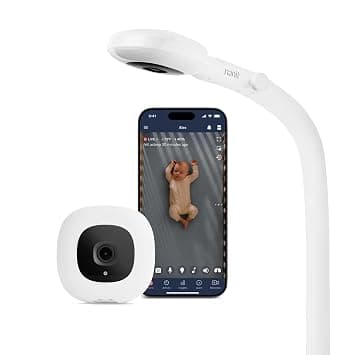
Nanit Pro Smart Baby Monitor with Floor Stand
The best picture and the best sleep data of the group, and the one to buy if you want a bird's-eye view of the entire crib rather than a corner of it. The trade is that it leans hardest on your home network and puts the analytics you are paying for behind Nanit Insights.
We may earn a commission on this link. It never changes the ranking.
- Mount
- Floor stand included, wall mount also available
- Tracking
- Video, sound, motion and breathing via Breathing Wear
- Subscription
- Nanit Insights required for full sleep analytics
- Best room
- Any, provided the router reaches it well
What works
- Overhead mount frames the whole mattress, so a baby who rolls does not roll out of shot
- Computer-vision motion and breathing tracking works through the patterned Breathing Wear rather than a sensor on the baby
- Sleep summaries are the most detailed and the most legible of any app here
- Two-way audio and a wide-angle night view that stays usable at full dark
What to know
- The stand or wall mount has to go up before it is any use, which is real work in a rented flat
- Insights subscription gates the sleep analytics that are the main reason to choose it
- Wi-Fi dependent with no local-only fallback, so a weak signal at the far end of the house is a hard problem
$239.00
Price checked Sep 17, 2026
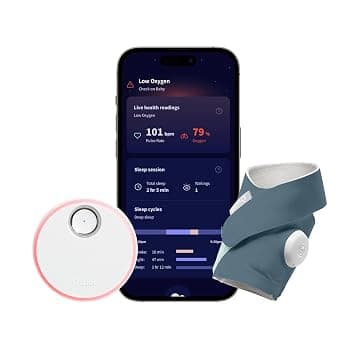
Owlet Dream Sock
A wearable rather than a camera. It reads pulse rate and oxygen from the foot and pushes sleep-quality notifications, which is a fundamentally different product from a video monitor and should be bought alongside one rather than instead of one.
We may earn a commission on this link. It never changes the ranking.
- Type
- Wearable sock sensor, no camera
- Reads
- Pulse rate and oxygen
- Medical status
- FDA-cleared over-the-counter pulse oximeter for healthy infants. Owlet's prescription BabySat is a separate product
- Fit range
- Sized socks covering roughly the first year
What works
- Answers the question a camera cannot, which is what the baby's body is doing rather than what it looks like
- FDA-cleared as an over-the-counter pulse oximeter for healthy infants, and Owlet sells a separate prescription system, BabySat, for infants who need monitoring under a medical provider
- The sock itself is washable and comes in sizes that cover most of the first year
What to know
- A sock that slips off a wriggling foot is the number one source of night-time false alerts
- Charging the sensor is one more thing to remember at bedtime
- Adds nothing at all to your view of the room, so most families end up owning two devices
$299.99
Price checked Sep 17, 2026
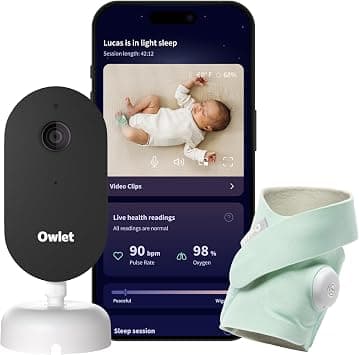
Owlet Dream Duo
The Dream Sock and the Dream Sight camera bundled into one app. It is the sensible way to buy Owlet, because almost everyone who buys the sock alone buys a camera within a month anyway, and running both inside a single app is worth more than the small saving.
We may earn a commission on this link. It never changes the ranking.
- Includes
- Dream Sock plus Dream Sight camera
- Tracking
- Pulse rate, oxygen, video and sound
- Best for
- Families who want vitals and video from one app
- Note
- The camera is sold separately if you already own the sock
What works
- One app for the view and the vitals, instead of switching between two brands at 3am
- Cheaper than buying the sock and the camera separately
- The camera half is genuinely good in the dark, which is when you will use it
What to know
- Inherits every sock complaint, because it is the same sock
- The most expensive option here, and the sock is the part that will need replacing first
- Still a Wi-Fi device with the same router problem as everything else on this list
$79.99
Price checked Sep 17, 2026
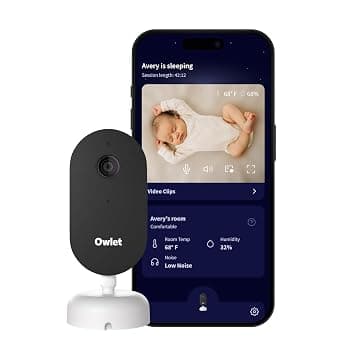
Owlet Dream Sight
The camera on its own, and the right buy for the large group of parents who want to see the room, hear the room, and are not interested in tracking anyone's oxygen. At eighty dollars it is the cheapest way onto a decent app.
We may earn a commission on this link. It never changes the ranking.
- Type
- Camera only
- Tracking
- Video and sound
- Mount
- Wall mounting kit sold separately
- Upgrade
- Pairs with Dream Sock in the same app
What works
- The lowest entry price of anything here by a wide margin
- Does the one job a monitor has to do, and does it well in the dark
- Upgrade path: add the sock later and both run in the same app
What to know
- No breathing or vitals tracking of any kind
- Needs mounting for a good angle, and the mounting kit is a separate purchase
- Video retention and history are the parts most likely to sit behind a plan
The comparison, in one table
| Monitor | Price | Watches breathing | On the baby | Subscription for the good bit |
|---|---|---|---|---|
| Nanit Pro Smart Baby Monitor with Floor Stand | $231.99 | Yes, via Breathing Wear | Patterned garment | Yes, Insights |
| Owlet Dream Sock | $239.00 | Pulse rate and oxygen | Sock sensor | No |
| Owlet Dream Duo | $299.99 | Pulse rate and oxygen | Sock sensor | No |
| Owlet Dream Sight | $79.99 | No | Nothing | For history and retention |
Who each one is wrong for
The Nanit is wrong for a rented flat where you cannot put anything on the wall and do not want a floor stand next to the cot, and it is wrong for anyone whose router is at the other end of a thick-walled house. It is also wrong if a recurring subscription for sleep charts irritates you on principle, because the charts are most of what you are paying for.
The Owlet Dream Sock is wrong for a light sleeper who will be woken by a slipped sock, and it is wrong as a sole monitor, because it cannot show you the room. It is right for the specific family whose anxiety is about breathing rather than about what the room looks like, and that family knows who they are.
The Dream Sight is wrong for anyone buying a monitor because of breathing anxiety, since it does not address that at all. It is right for the majority of families who mostly want to check whether a noise means anything before walking down the hall.
What we would actually buy
For most families, the Dream Sight at eighty dollars answers the real question, which is whether that noise needs a trip down the hall. Spend the difference on a better router position.
For a family that wants sleep data and is willing to run a subscription, the Nanit is the better instrument, and the overhead angle is a genuine advantage once a baby starts moving.
Questions people actually ask
Do I need a monitor that tracks breathing?
Not for medical reasons. The AAP does not recommend home cardiorespiratory monitors as a way to reduce sleep-related infant death risk. Plenty of parents buy one anyway because it helps them sleep, which is a real benefit, but it should be bought as a comfort device rather than as a safety intervention.
Wi-Fi monitor or a dedicated handheld screen?
If your nursery is far from the router or your broadband is unreliable, a dedicated 2.4GHz handheld unit is the more dependable choice and none of the picks above will beat it on reliability. If your signal is solid, a Wi-Fi monitor gives you the room from anywhere, plus recording and analytics that a handheld cannot do.
Why is there a subscription at all?
Video retention and sleep analytics both cost the manufacturer money every night the device runs. That is a defensible reason for a plan. What is worth checking before you buy is exactly which features stop working if you cancel, because the answer varies a lot between brands.
How long will we actually use it?
Owner reports cluster around two to three years, with heavy use in year one and occasional use after that. Monitors that mount overhead tend to be kept longer, because they still frame a toddler bed. Wearables are usually retired once the baby outgrows the largest sock.
Can one monitor cover two children?
Only if the app or parent unit supports multiple cameras, and only if you are willing to buy a second one. A single camera cannot cover two rooms, and if that is the actual shopping problem, the dedicated picks and the audio tradeoffs between them are in the best baby monitors for twins.
Where a monitor sits in the rest of the kit
Three questions come up often enough to have their own guides. Whether the vitals tracking does what the packaging implies is answered in do breathing monitors reduce SIDS risk. Whether to buy a connected camera or a dedicated handheld is settled in Wi-Fi versus DECT monitors, and if a dedicated handheld is the answer, the DECT baby monitor roundup has the picks. And if the nursery is at the wrong end of the house, start with monitor range in a house with thick walls before you spend anything at all. If a connected camera is the answer, can a Wi-Fi baby monitor be hacked covers the documented incidents and the settings that actually close the gap.
Wherever a camera lands, the cord that powers it is its own hazard, separate from anything the camera watches for: the CPSC has recalled monitors from two different brands over cords that reached into the crib, and baby monitor cord safety and placement covers the 3-foot rule those recalls put on the books. And when the camera has outlived its job, when to stop using a baby monitor covers taking it down with its cord, the sock's printed age range, and why the move to a bed argues for keeping one a while longer. Packing it for a trip changes the network, the room and the crib on the same night, and traveling with a baby monitor covers hotel Wi-Fi, travel cribs and where the cord goes in a room nobody has measured. White noise machines and daytime naps on the move raise a different version of the same monitoring question, just in a different room.
Sources
- Nanit product specifications (nanit.com)
- Owlet Dream Sock product page (owletcare.com)
- Owlet, Frequently Asked Questions about FDA-Cleared Dream Sock
- Owlet BabySat, the FDA-cleared prescription system (owletcare.com)
- American Academy of Pediatrics safe sleep recommendations
- CPSC recall database
As an Amazon Associate we earn from qualifying purchases. We earn a commission on some links, at no extra cost to you. It never changes which products we recommend or the order they appear in. Full disclosure

Who wrote this
Writer, standards and the recall record
Dan Whitfield writes the standards side of BabyGearSearch: what a certification actually covers, what the CPSC recall database says about a brand, and what the one-star reviews agree on six months in. He is not a clinician and does not write as one. His job is to read the standard rather than the marketing page, quote the real number, and name the limit the packaging skipped.
More from DanThe standard
How this guide was built
- Manufacturer specification sheets and warranty terms, read in full rather than summarised from a listing.
- The federal safety standard the product is certified to, plus anything NHTSA, the AAP or the CPSC has published on it.
- Owner reports at volume, including the one-star reviews, which is where failure modes live.
- Every price checked against the live listing on the date printed beside it.