Traveling With a Baby Monitor: Hotel Wi-Fi, Travel Cribs and the 3-Foot Rule
Why a Wi-Fi camera often refuses hotel Wi-Fi, what a local-link monitor does instead, and how to place any camera in a room you have never seen.
- Writer, standards and the recall record
- Oct 11, 2026
- 12 min read
In this guide
A baby monitor that has run without complaint at home for six months was set up for one network, one room and one outlet, all chosen long ago. A trip changes all three on the same night. The network belongs to a hotel, the room is one nobody has measured, and the crib is usually a play yard that was unfolded an hour earlier. Each of those changes breaks a different kind of monitor in a different way, and one of them is a safety question rather than a convenience one.
This guide takes them in the order they tend to fail: the connection first, then whether the camera is needed at all, then where it goes, then the sleep space it is pointed at, and finally the flight.
Why a Wi-Fi camera often will not join hotel Wi-Fi
Most hotel networks sit behind a captive portal, the page that asks for a room number and a surname before the internet works. A phone or laptop clears that page in a browser. A monitor camera has no browser, so it never gets past the door.
Some manufacturers go further and refuse those networks on purpose. Nanit states it plainly in its own travel advice: its baby monitor and its Sound + Light unit "are not compatible with unsecured wifi networks (like open networks or captive portal hotel networks)." The company's suggested fix is an inexpensive travel router, which joins the hotel network once, clears the portal itself, and then broadcasts a private, password-protected network that the camera can join as if it were home.
Owlet draws a different and useful line. Its travel guidance says the Dream Sock base station still sends alerts without Wi-Fi, while the app and its live readings need a password-protected internet connection. That means the sound and light at the base station keep working in a hotel with no usable network, and the phone screen does not. If the base station is the alert that matters, it has to sit where an adult will hear it.
A rental house or a relative's home with an ordinary password-protected router is a different case, and the camera will usually join it the way it joined the network at home. The catch is that the router belongs to someone else. Joining a network you do not control is a security decision as well as a setup step, and the documented cases in the guide to Wi-Fi monitor hacking are worth five minutes before you hand a stranger's router a live video feed of a sleeping baby. A travel router fixes that problem too, since the camera only ever sees your own network.
Three ways around a portal, roughly in order of reliability:
- A travel router. One device, set up at home before the trip, and the camera pairs to it the same way every time.
- A phone's personal hotspot. It works for some cameras, but the phone doing the broadcasting has to stay in the room, and the stream draws on its data plan all night.
- The front desk. Some hotels can put a device on a separate password-protected network. Ask before arrival, not at 9pm.
The monitor that does not care where it is
A DECT or other local-link monitor skips the whole problem. The camera talks straight to its own parent unit over a private radio link, so there is no network to join, no portal to clear and no account to sign into. The pairing done at home travels with it. The trade-offs are the ones laid out in the Wi-Fi versus DECT comparison: no viewing from outside the building and a smaller picture on a dedicated screen. On a trip those costs mostly disappear, because the parents are rarely more than a few rooms away.
Range is the variable that does change. Many hotels are built with concrete floors and steel framing, and an older rental may have plaster over lath. Both behave like the dense walls described in the guide to monitor range in a house with thick walls, so a parent unit that reached the garden at home may drop out two doors down a hotel corridor. Test it on the first evening, before bedtime, by walking the parent unit to wherever the adults plan to spend the evening and watching for the out-of-range warning.
In a hotel room, the adult is often the monitor
Before packing the camera at all, it helps to know what the American Academy of Pediatrics says about where a baby sleeps. The AAP recommends room sharing for at least the first six months: the baby's own crib, bassinet or play yard in the parents' room, close to the bed but never in it. Its parent site adds that room sharing "makes it easier to feed, comfort and monitor" a baby through the night.
A single hotel room is room sharing by default. The camera earns its place in the cases where the adults are somewhere else: a suite or rental with a separate bedroom, an early bedtime while the parents sit on a balcony, or naps during the day. If none of those apply to the trip, the monitor can stay home and nothing is lost.
Placement in a room you have never seen
This is the part that is not about convenience. In 2011 the Consumer Product Safety Commission announced a recall of about 1.7 million Summer Infant video monitors after two infants were strangled by the camera cords. One was a 10-month-old girl whose monitor camera had been placed on top of the crib rail. The CPSC's conclusion in that recall notice applies to every corded camera sold since: parents and caregivers "should never place these and other corded cameras within three feet of a crib."
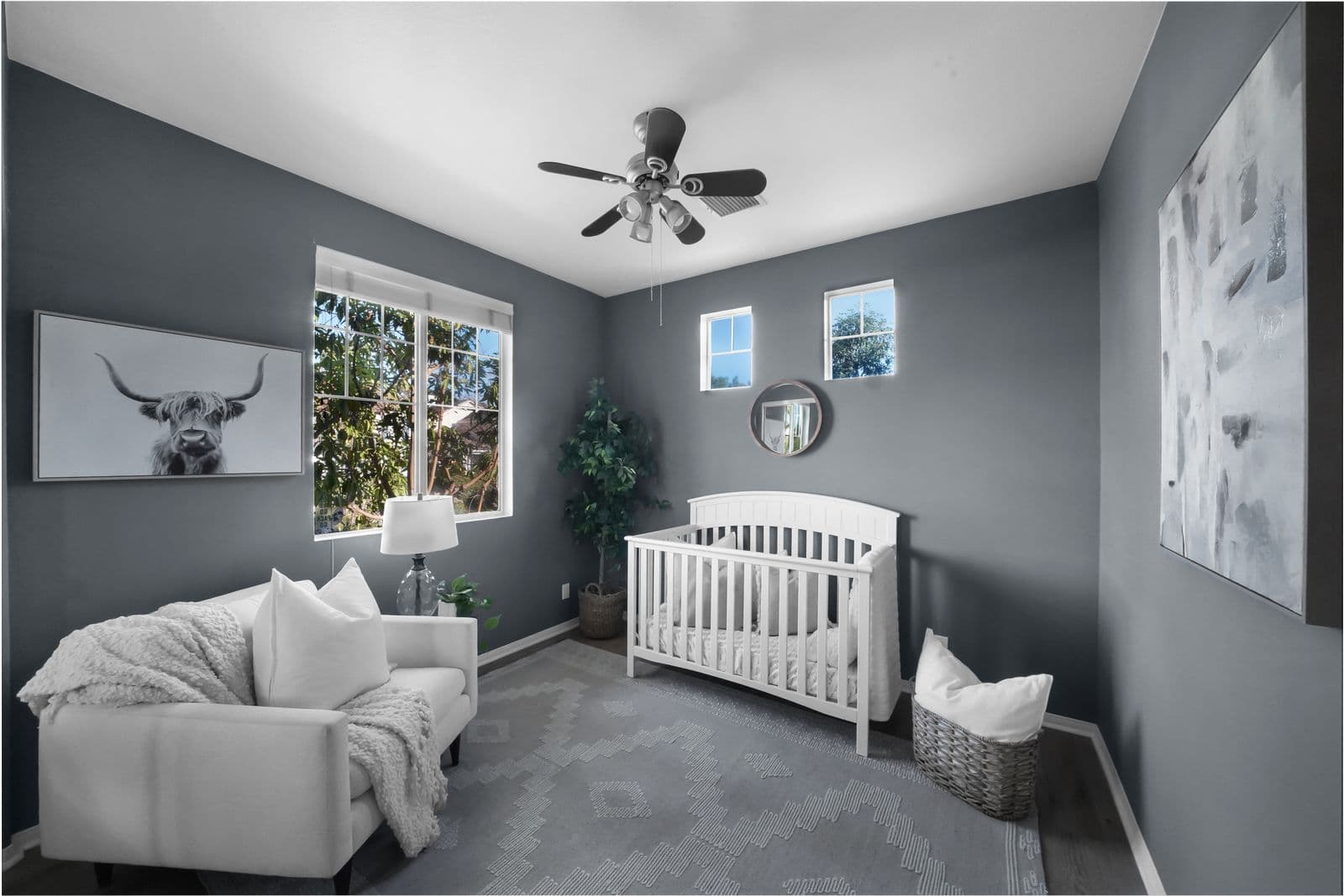
The CPSC's earlier warning named cribs, bassinets and play yards together, and asked parents to keep corded monitor cords out of arm's reach and to check that no other cord, from lamps, nightlights, radios or window coverings, sits near the sleep space. A hotel room tends to supply all of those within a few feet of wherever the travel crib fits, which is often the gap between the bed and the curtains.
Set the room up in this order:
- Put the play yard down first. Its position decides everything else, so choose a spot away from the window, the curtain cords and the bedside lamp.
- Measure three feet from every side. The CPSC describes three feet as about the width of a crib plus six inches. A play yard is narrower than a full-size crib, so use a tape measure or count a long stride, and measure from the rail, not from the mattress.
- Mount the camera on furniture outside that zone, such as a dresser or desk, and never clip it to the play yard's rail or frame. A camera on the rail is the exact placement in one of the Summer Infant deaths.
- Route the cord along the wall. Painter's tape or reusable cable clips hold it to the baseboard without damaging hotel paint. An extension lead that lets the camera reach a closer outlet only moves the hazard.
- Check it again each evening. Furniture in a room that someone else cleans can shift between nights, and a dresser nudged six inches can put a cord back in reach.
The longer version of the rule, with the recall history behind it, is in the guide to baby monitor cord safety.
The sleep space under the camera
A monitor watches a sleep space and does nothing to make it safe. On a trip, that space is usually borrowed, and the evidence on borrowed cribs is not reassuring. When the CPSC and the National SAFE KIDS Campaign spot-checked 90 hotels and motels in 2000, unsafe cribs or play yards turned up at 80 percent of them. Of the cribs inspected, 82 percent had at least one hazard, including loose hardware, soft bedding and adult-sized sheets. Of the play yards and mesh cribs, 52 percent had one, most often tears or holes in the mesh. Those numbers are a quarter-century old and the standards have tightened since, but the inspection habit they argue for has not aged.
Check whatever the hotel brings up before the baby goes in it. The mesh should have no tears, holes or loose threads. The CPSC's play yard safety sheet says to use only the mattress sold with the play yard, so an extra pad or a folded duvet underneath is out. A fitted sheet sized to that mattress is the only thing that belongs inside, which is why many families pack their own rather than trust a hotel's.
The AAP also notes that travel bassinets and other alternative sleep surfaces are acceptable only if they meet the federal standards for infant sleep products. That requirement is not theoretical. In December 2025 the CPSC warned consumers to stop using Tuyedoqe travel bassinets, sold on Amazon for about $40, because they violated the mandatory standard: they had restraints that posed a strangulation hazard and sides too low to contain an infant. If the trip involves bringing a sleep space instead of borrowing one, the travel crib and play yard roundup covers what to look for in one that meets the standard.
Flying with a monitor
Under FAA rules, devices containing lithium batteries should travel in the cabin. That covers most parent units, battery-powered cameras and the Owlet sock sensor. If one does end up in a checked bag, the FAA requires it to be completely powered off and protected from accidental activation. Spare lithium batteries and power banks are stricter: carry-on only, and if a carry-on bag is gate-checked, they come out of it and stay with the passenger.
Pack the whole monitor kit in the cabin bag regardless. A delayed suitcase is an inconvenience. A delayed monitor on the first night in an unfamiliar room is the one item that cannot be bought at the airport.
For international trips, read the input rating printed on each power adapter. A label reading 100-240V needs only a plug adapter, while one rated for a single voltage needs a converter, and a monitor plugged into the wrong supply can fail on the first night.
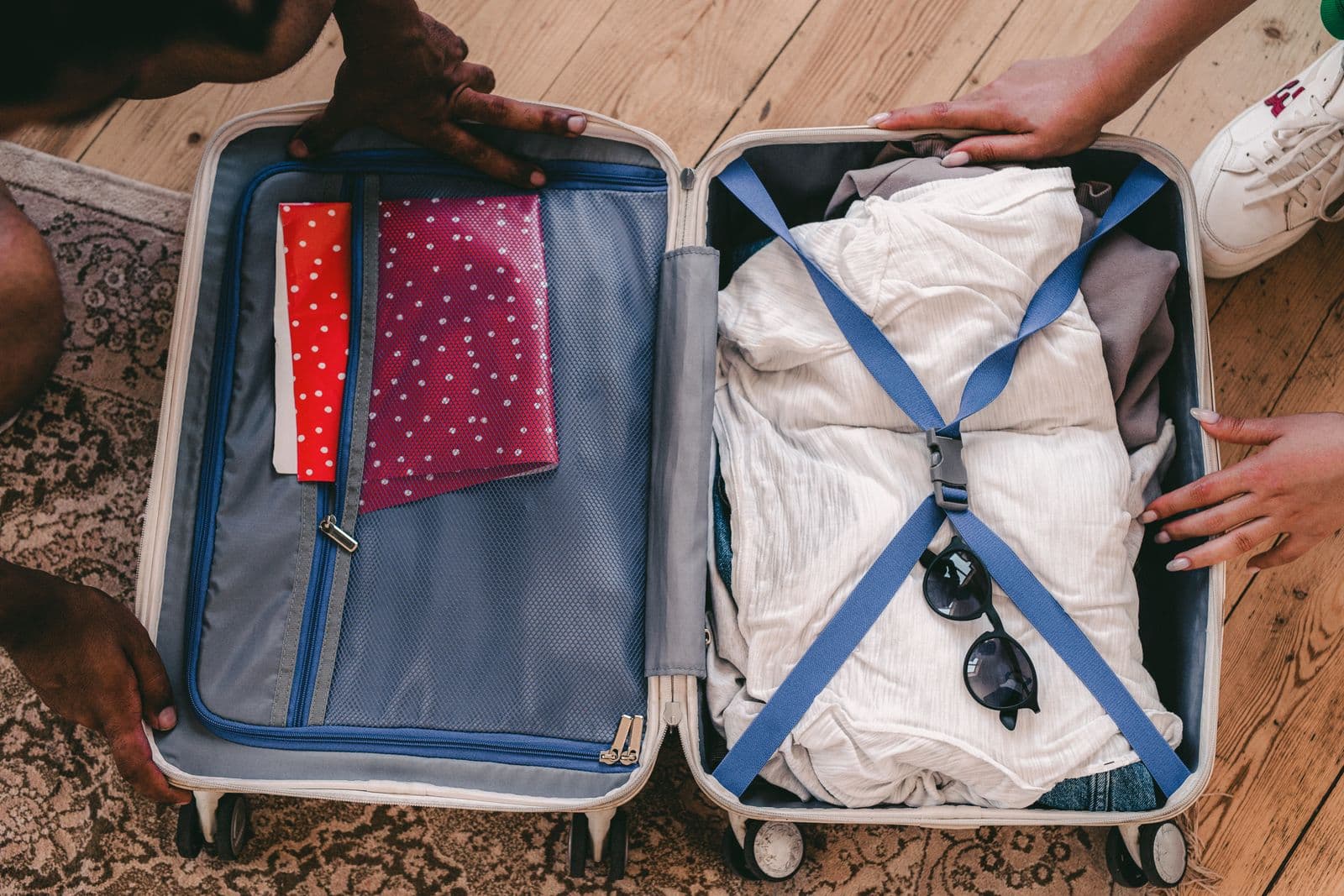
A short packing list
- The monitor, every original power adapter and the cables that came with them
- A travel router, already paired with the camera at home, if the monitor uses Wi-Fi
- Plug adapters for the destination, checked against each adapter's voltage label
- Painter's tape or reusable cable clips for running the cord along a wall
- A tape measure, or a known stride, for the three-foot check
- A fitted sheet sized to the play yard mattress that will actually be used
Questions people actually ask
Will a Wi-Fi baby monitor work on hotel Wi-Fi?
Often not. Most hotel networks require a login page in a browser, and a monitor camera has no browser to complete it. Nanit states that its monitor is not compatible with open networks or captive portal hotel networks. A travel router that clears the login page and broadcasts a private network is the usual fix.
Does a DECT baby monitor work in a hotel?
Yes. A DECT or other local-link monitor talks directly to its own parent unit and never touches the hotel network. The variable is range, because concrete floors and steel framing can shorten it, so walk the parent unit to where the adults will be before bedtime.
Do I need a baby monitor in a hotel room at all?
Not if everyone sleeps in one room. The AAP recommends room sharing for at least the first six months, and a single hotel room is room sharing already. A monitor earns its place in a suite or rental with a separate bedroom, or during naps and early bedtimes while the adults are elsewhere.
How far should a monitor be from a travel crib or play yard?
At least three feet from every side, the same as a full-size crib. The CPSC has warned about monitor cords near cribs, bassinets and play yards alike, and never clip a camera to the play yard rail.
Can a baby monitor go in checked luggage?
The FAA says devices with lithium batteries should be carried in the cabin, and if one is checked it must be fully powered off and protected. Spare lithium batteries and power banks are carry-on only. Packing the whole monitor kit in the cabin bag avoids the question.
Sources
- Nanit, 6 tips to surviving your first spring break with baby (2024)
- Owlet, Traveling with Owlet: Peace of Mind on the Go
- CPSC, Two Strangulation Deaths Prompt Summer Infant to Recall Video Baby Monitors with Cords (2011)
- CPSC OnSafety, Keep Baby Monitor Cords Out of Reach (2010)
- CPSC OnSafety, Baby Monitor Cords: 3 Feet from Baby (2012)
- CPSC, Crib Safety Initiative with the National SAFE KIDS Campaign and Bass Hotels and Resorts (2000)
- CPSC, Keep Baby Safe in Play Yard Space (safety sheet)
- CPSC, Warning on Tuyedoqe Travel Bassinets (December 2025)
- American Academy of Pediatrics, HealthyChildren.org: A Parent's Guide to Safe Sleep
- FAA PackSafe, Portable Electronic Devices Containing Batteries
- FAA PackSafe, Lithium Batteries
As an Amazon Associate we earn from qualifying purchases. We earn a commission on some links, at no extra cost to you. It never changes which products we recommend or the order they appear in. Full disclosure

Who wrote this
Writer, standards and the recall record
Dan Whitfield writes the standards side of BabyGearSearch: what a certification actually covers, what the CPSC recall database says about a brand, and what the one-star reviews agree on six months in. He is not a clinician and does not write as one. His job is to read the standard rather than the marketing page, quote the real number, and name the limit the packaging skipped.
More from DanThe standard
How this guide was built
- Manufacturer specification sheets and warranty terms, read in full rather than summarised from a listing.
- The federal safety standard the product is certified to, plus anything NHTSA, the AAP or the CPSC has published on it.
- Owner reports at volume, including the one-star reviews, which is where failure modes live.
- Every price checked against the live listing on the date printed beside it.