Homemade Baby Food Safety: What the AAP Actually Recommends
Readiness signs, the foods that stay off the menu regardless of texture, and how long a batch of purees actually keeps, straight from the AAP's own guidance.
- Writer, standards and the recall record
- Sep 5, 2026
- 10 min read
In this guide
- Readiness comes before the recipe
- What stays off the menu, regardless of preparation
- The allergen question the guidance has reversed
- Texture, and the one thing never to do with a bottle
- Storage: the part a jar's label used to handle for you
- What homemade preparation does not solve
- Where this fits with the rest of the first-foods decision
- Sources
Homemade baby food has a reputation problem in both directions. One camp treats a jar of store-bought puree as somehow lesser, and the other treats "homemade" as an automatic safety upgrade. Neither is quite right. A pot, a steamer basket and a blender make food that is nutritionally comparable to a jar in most cases, and making it yourself does not, by itself, remove or add any risk that matters. What it does is hand you the decisions a jar's label used to make for you: which foods, at what age, prepared how, and stored for how long. Those are the decisions worth getting right, and the American Academy of Pediatrics has published specific, checkable answers to most of them.
This is not a recipe guide. It is the safety and timing layer underneath one, sourced from the AAP's own consumer guidance and the FDA's current position on contaminants in food marketed to babies, because that is the layer most homemade-food advice skips past on the way to a recipe.
Readiness comes before the recipe
The AAP's guidance on starting solid foods lists four signs rather than a single birthday, and all four should be present, not just one:
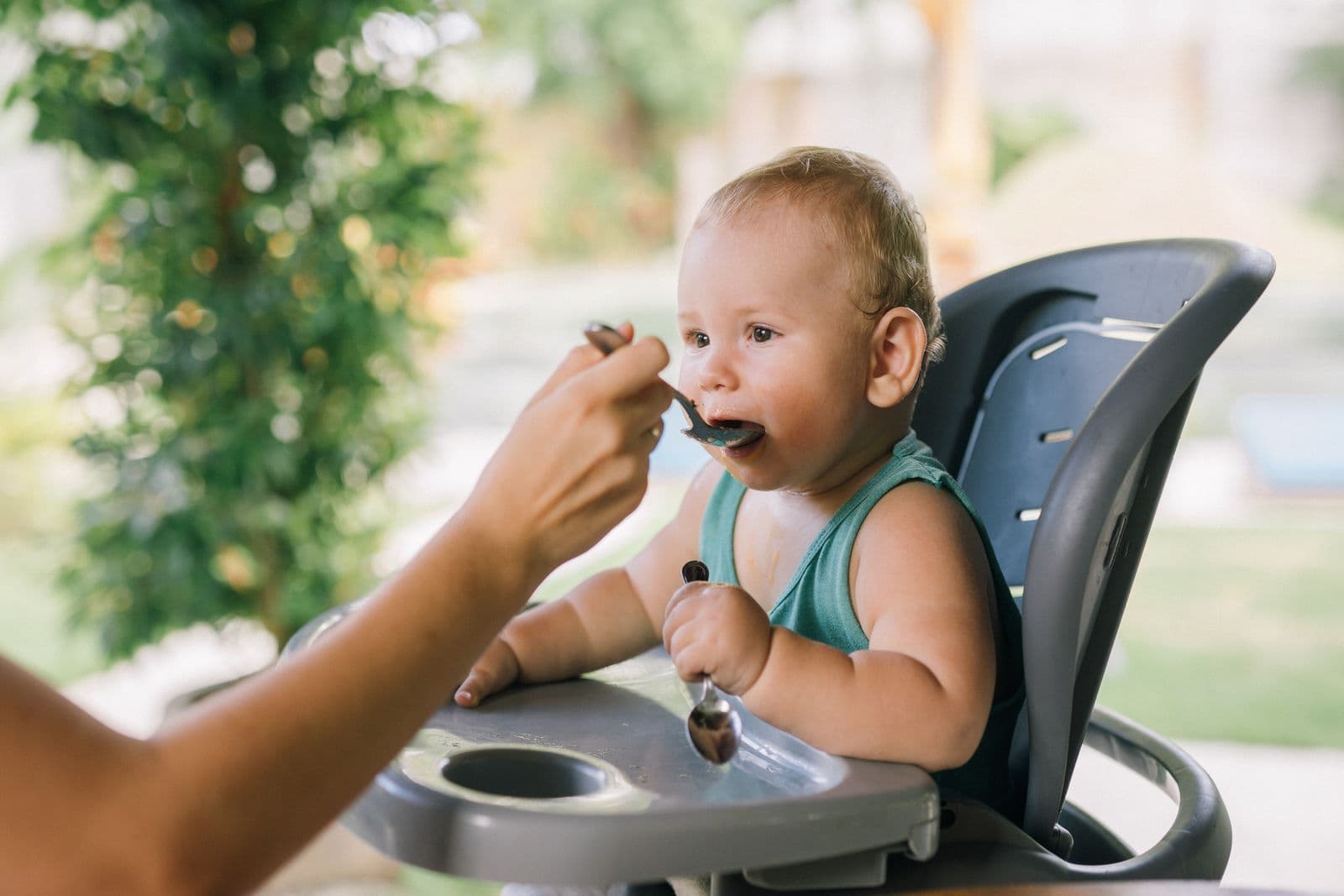
- Head and trunk control. A baby should be able to sit in a high chair, feeding seat or infant seat with good head control before solids start, since swallowing safely depends on it.
- Interest in food itself. Watching others eat and reaching for food is a stronger signal than simple hunger, which every baby already displays regardless of readiness.
- Loss of the tongue-thrust reflex. Early in infancy, a reflex pushes anything solid back out of the mouth. Solids introduced before this reflex fades mostly come back out, which is often mistaken for refusal when it is really a motor reflex still doing its job.
- Weight as a rough marker. Having roughly doubled birth weight, typically around four months and up, is the AAP's stated size marker, though the other three signs matter more than the number on its own.
The Academy's stated position is that babies get only breast milk for about six months, then move to solids while breastfeeding continues, which puts most babies at the start of this window rather than the earliest edge of it. A baby who does not yet sit with support or still pushes a spoon back out reflexively is not behind: they are not there yet, and starting earlier does not speed anything up.
What stays off the menu, regardless of preparation
Some restrictions are about the food itself and no amount of careful pureeing changes them.
Honey, completely, under age one. Honey can carry Clostridium botulinum spores, and an infant's digestive system cannot yet suppress them the way an older child's or adult's can, creating a risk of infant botulism. This applies to honey in any form, including baked into a recipe, and the restriction lifts at the first birthday, not sooner.
Choking hazards, independent of the puree question. Whole nuts, raw carrot, popcorn, whole grapes and hard seeds stay off the table because of their shape and firmness at any age this guide covers, not because they were prepared wrong. A puree by definition avoids this category. The risk shows up later, at the transition to table foods and finger foods, which is a separate stage with its own rules.
Homemade infant formula, never. This is worth stating on its own because it gets grouped with homemade solid food in search results and is a different and much higher-risk category. Commercial infant formula is manufactured to fortification and safety standards a home kitchen cannot replicate, and the AAP's guidance is direct that formula should never be made at home. The actual safety work that belongs to formula, mixing it correctly and handling it once made, is a separate subject covered in preparing powdered formula safely.
The allergen question the guidance has reversed
Older advice delayed common allergens as a precaution. The AAP's current position states plainly that there is no evidence that waiting to introduce baby-safe, appropriately soft forms of egg, dairy, soy, peanut products or fish beyond four to six months prevents food allergy. That earlier introduction may in fact reduce the odds of an allergy developing in most infants. The one carve-out is a baby with severe eczema or an existing egg allergy, where the AAP recommends discussing allergen introduction, particularly peanut, with a pediatrician first rather than proceeding on the general timeline. This is a case to send to a clinician specifically, not a judgment call for a kitchen. The testing thresholds and the safe forms to actually serve peanut in are covered in full in when to introduce peanut and egg.
Texture, and the one thing never to do with a bottle
Foods at this stage need to be soft or pureed specifically to prevent choking, with texture increased gradually as a baby's own chewing and swallowing coordination develops rather than on a fixed schedule. The AAP's guidance is also specific on one common shortcut: cereal or puree should never go into a bottle, including the folk practice of thickening a bottle to help a baby "sleep through the night." It does not reliably do that. It changes how an infant swallows in a way that raises choking risk rather than lowering it.
Storage: the part a jar's label used to handle for you
A commercial jar carries a use-by date and a sealed-until-opened guarantee. Homemade food needs the same information supplied by the cook, and the AAP's guidance gives specific numbers rather than a general "use promptly."
Freezing in portions. An ice cube tray, or a dedicated silicone freezer tray with a snap lid, is the AAP's own suggested method: freeze a batch in roughly one-ounce portions, then transfer the frozen cubes to a labeled, dated bag or container once solid. The one-ounce size matters less for precision and more so that thawing one meal does not mean thawing the whole batch.
Label the food and the date. This sounds like housekeeping rather than safety until a freezer has four unlabeled bags of orange puree in it and no way to tell squash from carrot from sweet potato, or how long any of them have been there.
Three months in the freezer. The AAP's guidance is to use frozen homemade baby food within three months, reheated on the stove or in the microwave, not left indefinitely on the theory that freezing stops the clock entirely.
Meat, fish, egg and dairy purees move faster. These categories should be used or refrozen within roughly 24 hours of cooking if kept refrigerated rather than frozen immediately, a shorter window than a straightforward fruit or vegetable puree. Thawed portions of any kind should not go back in the freezer.
What homemade preparation does not solve
Making food at home does not address heavy metal exposure, which is a property of the ingredient and its growing conditions rather than of who prepared it or how. The FDA's Closer to Zero initiative targets four contaminants specifically, arsenic, lead, cadmium and mercury, in foods commonly eaten by babies and young children. Has finalized new, lower action levels for lead as of January 2025, with draft guidance for arsenic and cadmium still in progress. The FDA's own stated approach is not to single out and eliminate any one commodity, since doing so risks removing foods with real nutritional value. But to reduce exposure "while maintaining access to nutritious foods." The practical version of that advice for a home cook is the same one nutritionists give regardless of where the food comes from: rotate across a real variety of fruits, vegetables and grains rather than repeating the same two or three purees for months, since variety is what actually limits exposure to any single contaminant, not the act of cooking at home.
None of this is a reason to avoid particular foods outright. It is a reason to treat variety as the operating rule for a homemade rotation the same way it should be for a jarred one, and a reminder that "I made it myself" is not, on its own, a safety claim about heavy metals.
Where this fits with the rest of the first-foods decision
None of the above decides between purees and baby-led weaning: a family can run a self-feeding approach for most meals and still keep a freezer stash of purees for the times a spoon is faster than a fistful of steamed pear, and the randomized evidence on baby-led weaning covers a different question (iron intake and choking rates) than the one this guide answers. Where the kitchen itself is the binding constraint rather than the food, the high chair that fits a small kitchen covers the floor-space side of this same stage. And for the equipment question specifically, whether a steam-and-blend machine, a hand-crank mill or a pot and blender already in the cupboard is worth buying, the best feeding gear roundup covers the products. This guide covers what decides whether any of them are being used safely.
Sources
- HealthyChildren.org (AAP), "Is it OK to make my own baby food?"
- HealthyChildren.org (AAP), "When Can Babies Start Solid Foods? Readiness & Feeding Tips"
- FDA, "Closer to Zero: Reducing Childhood Exposure to Contaminants from Foods"
Questions people actually ask
What is the actual age to start solid foods, not just the general guideline?
The AAP's guidance is breast milk alone for about six months, then solids alongside continued breastfeeding, with readiness judged by sitting with support, loss of the tongue-thrust reflex, interest in food and roughly doubled birth weight rather than the calendar date alone.
How long does homemade puree actually keep?
Refrigerated fruit and vegetable purees are typically good for about 48 to 72 hours; purees containing meat, fish, egg or dairy should be used or frozen within about 24 hours. Frozen in one-ounce portions, purees keep for about three months per the AAP's own guidance.
Is it true that starting allergens early prevents allergies?
The AAP states there is no evidence that delaying common allergens like egg, dairy, peanut, soy or fish past four to six months prevents allergy, and that earlier introduction may reduce the odds of developing one in most infants. Babies with severe eczema or an existing egg allergy are the exception, and should have peanut introduction discussed with a pediatrician first.
Does homemade food have fewer heavy metals than jarred food?
Not automatically. Heavy metal levels in foods like rice and root vegetables are a function of the ingredient and where it grew, not who cooked it or how. The FDA's own guidance points to variety across foods as the practical lever, not switching from jarred to homemade or the reverse.
Can I thicken a bottle with baby cereal to help my baby sleep longer?
No. The AAP specifically advises against putting cereal or puree in a bottle. It raises choking risk and is not shown to reliably improve sleep, despite being a long-running piece of folk advice.
As an Amazon Associate we earn from qualifying purchases. We earn a commission on some links, at no extra cost to you. It never changes which products we recommend or the order they appear in. Full disclosure
Who wrote this
Writer, standards and the recall record
Dan Whitfield writes the standards side of BabyGearSearch: what a certification actually covers, what the CPSC recall database says about a brand, and what the one-star reviews agree on six months in. He is not a clinician and does not write as one. His job is to read the standard rather than the marketing page, quote the real number, and name the limit the packaging skipped.
More from DanThe standard
How this guide was built
- Manufacturer specification sheets and warranty terms, read in full rather than summarised from a listing.
- The federal safety standard the product is certified to, plus anything NHTSA, the AAP or the CPSC has published on it.
- Owner reports at volume, including the one-star reviews, which is where failure modes live.
- Every price checked against the live listing on the date printed beside it.