Do You Need a Bottle Sterilizer? What the CDC Actually Asks For
The CDC separates cleaning from sanitizing, names the three babies who need daily sanitizing, and says a hot dishwasher already does the job.
- Writer, standards and the recall record
- Sep 27, 2026
- 14 min read
In this guide
- Cleaning and sanitizing are two different jobs
- The three babies the daily sanitizing step is for
- What the AAP's parent site says
- The dishwasher you already own may be the sterilizer
- Four ways to sanitize, and what each one costs
- Who a countertop sterilizer is wrong for, and who it suits
- The case that shows where the risk sits
- Breast pump parts follow the same rules, plus the tubing
- Look at the parts while you clean them
- Sources
A plug-in bottle sterilizer is one of the most common items on a feeding registry, and one whose job shrinks faster than most parents expect. The reason is not that parents get lazy. It is that the federal guidance on bottle hygiene asks for something narrower than the box implies, and a lot of households already own an appliance that meets it.
The CDC's page on cleaning, sanitizing and storing infant feeding items draws a line that most packaging blurs. Cleaning happens after every feeding, for every baby. Sanitizing is a separate, extra step, and the agency asks for it daily only for three groups of infants. For everyone else it describes daily sanitizing as something that "may not be necessary" if the items are cleaned carefully after each use. And it adds one sentence that settles the question for many kitchens: if you use a dishwasher with hot water and a heated drying cycle, or a sanitizing setting, a separate sanitizing step is not necessary.
So the sterilizer is optional for most families and useful for some. What is not optional is the cleaning routine underneath it, which is where the documented failures happen.
Cleaning and sanitizing are two different jobs
The distinction matters because a sterilizer only does the second one. The CDC's guidance describes cleaning as taking every part apart (bottle, nipple, ring, cap and any valve or membrane), rinsing under running water, washing with hot soapy water and a brush, rinsing again and letting everything air-dry. Sanitizing comes after that and only after that. The page is explicit that items should be cleaned before they are sanitized.
A steam cycle run over a nipple that still has a film of milk inside it is sanitizing dirt, which is why the agency spends far more words on how to wash than on how to sterilize. The cleaning steps it lists are specific:
- Wash your hands for 20 seconds before handling clean parts.
- Rinse parts under running water and do not set them down in the sink.
- Wash in a basin used only for infant feeding items, not directly in the sink, because the sink itself may carry germs.
- Use a brush kept only for feeding items, and squeeze water through the nipple holes.
- Air-dry on a clean, unused dish towel or paper towel. Do not rub or pat parts dry with a towel, because that can move germs back onto them.
The same page also covers the basin and the brush. Rinse them and let them air-dry after each use, and wash them every few days. For a baby under two months, born prematurely or with a weakened immune system, the CDC asks for the basin and brush to be washed after every use.
The three babies the daily sanitizing step is for
The CDC names the same three groups in its feeding-items guidance, its breast pump guidance and its page on Cronobacter infection: infants younger than two months, infants born prematurely, and infants with a weakened immune system due to illness or medical treatment such as chemotherapy. For those babies, the agency asks for feeding items to be sanitized at least once a day.
The CDC's page on Cronobacter explains why that particular group recurs. Cronobacter is a bacterium that can contaminate dry foods such as powdered formula and, in the CDC's words, feeding items like breast pump equipment. Infections are rare, but the agency says infants under two months are the most likely to develop meningitis if infected, and that infections in infants usually occur in the first days or weeks of life. The formula side of that risk, and the hot-water mixing step that addresses it, is covered in preparing powdered formula safely. This article is about the equipment side.
For a full-term, healthy baby past two months, the CDC's own language is that daily sanitizing may not be necessary if items are cleaned carefully after each use. Nothing in the guidance says it is harmful to keep sanitizing. The point is that the purchase is not required once a baby is outside those three groups.
What the AAP's parent site says
The American Academy of Pediatrics' parent site, HealthyChildren.org, is looser still. Its page on how to sterilize and warm baby bottles, drawn from the AAP book on nutrition, opens by noting that parents and pediatricians are not as concerned with sterilizing bottles and water as they were a generation ago. For glass bottles used with powdered or concentrated formula, it says you do not need to boil the bottles. A dishwasher with heated water and a hot drying cycle, or a wash in hot soapy water followed by a thorough rinse, "should kill most germs."
The two sources agree on the structure: wash well every time, and treat heat sanitizing as the extra layer. The CDC is the more specific of the two about who needs that extra layer daily, which is why it is the one to follow when the baby is in one of the three groups. Anything about a particular baby's medical situation, including a NICU graduate's discharge instructions, belongs with that baby's own pediatrician or care team, whose instructions override a general page.
The dishwasher you already own may be the sterilizer
This is the sentence in the CDC guidance that decides most purchases. A dishwasher run with hot water and a heated drying cycle, or on a sanitizing setting, makes a separate sanitizing step unnecessary. That applies to bottles and to breast pump parts alike, since the agency repeats the same tip on its pump page.
Three details in the dishwasher instructions are easy to miss:
- Small parts go in a closed-top basket or a mesh laundry bag. Nipples, valves and membranes otherwise end up in the filter.
- Both settings matter. Hot water and the heated dry (or the sanitize cycle) are what carry the claim. An eco cycle with an air dry is a wash, not a sanitize.
- Wash your hands before unloading. Parts that are not fully dry go on a clean, unused towel to finish air-drying before storage.
Before relying on this, check two things. First, that the bottle maker lists its parts as dishwasher safe, and on which rack. The CDC tells parents to check with the manufacturer about which sanitizing method to use. Second, that the dishwasher actually has a sanitize or heated-dry option. Many compact and older machines do not, and a machine without one leaves you back at a separate sanitizing step.
Four ways to sanitize, and what each one costs
The CDC lists four routes. Each reaches the same end, so the choice is about time, counter space and what your bottles tolerate.
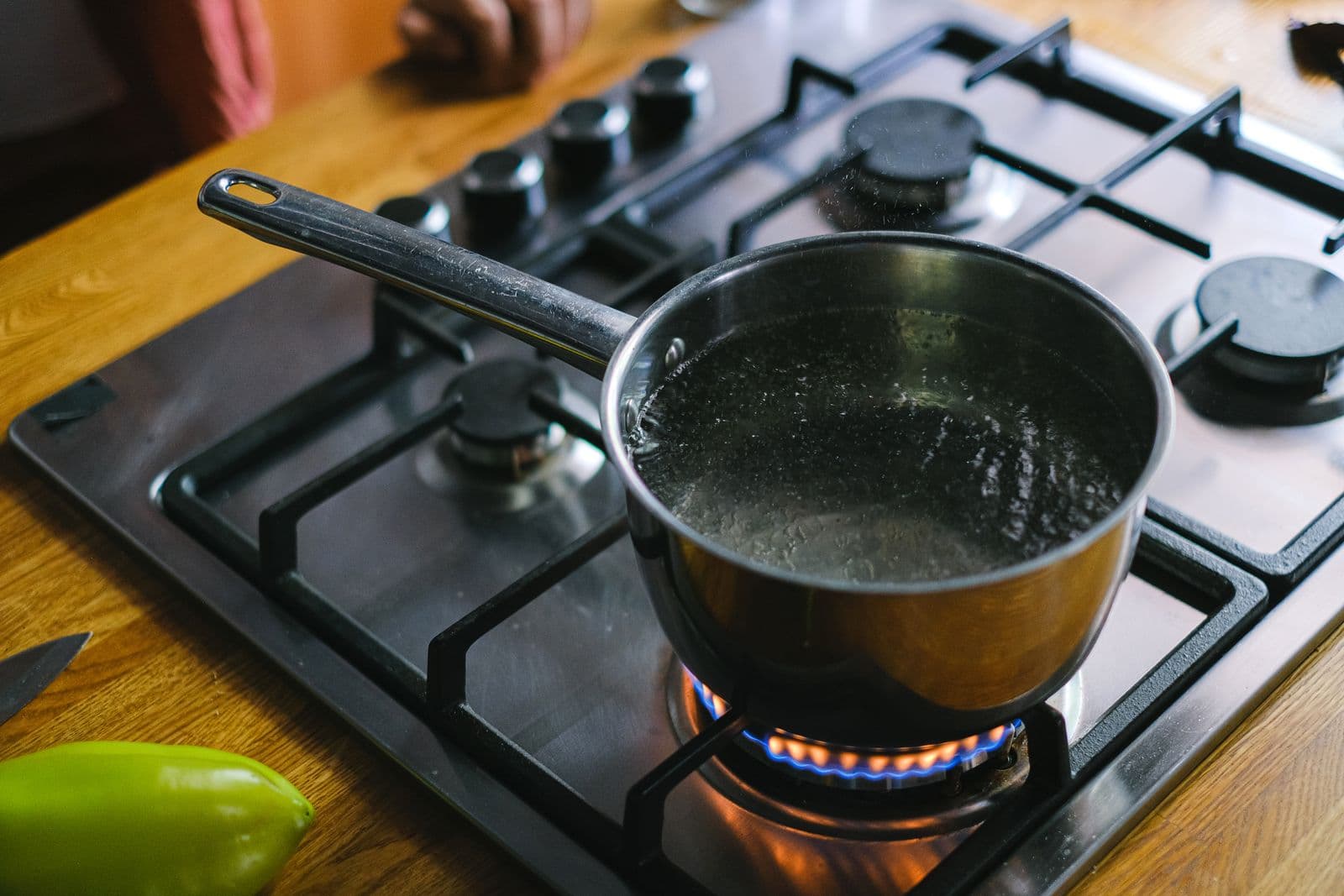
Boiling. Put the disassembled parts in a pot, cover them with water, bring it to a boil and boil for five minutes, then lift everything out with clean tongs. It costs nothing beyond a pot, which is why it is the method every other one is measured against. The drawback is attention. Someone has to watch a pot, and not every part is rated for boiling, so check the bottle maker's instructions before anything goes in.
Steam, by microwave bag or plug-in unit. Follow the manufacturer's instructions for sanitizing, cooling and drying. This is the category the sterilizer aisle sells. A microwave steam bag or tray does the same job as a countertop unit at a fraction of the size. A plug-in unit adds capacity and, on models with a drying function, spares you the towel stage. It does not add a different level of hygiene from boiling or a hot dishwasher cycle.
Bleach, when heat is not available. The CDC gives this as the option for when you cannot boil, steam or use a dishwasher, such as during a power outage or while travelling. Two teaspoons of unscented bleach per gallon (16 cups) of water in a clean basin. Submerge everything with no trapped air bubbles, squeeze the solution through the nipple holes and soak for at least two minutes. Then lift the parts out and do not rinse them, because rinsing can put germs back on. The CDC says any remaining bleach breaks down as it dries.
A hot dishwasher cycle, covered above, which does the washing and sanitizing in one pass if both settings are on.
Who a countertop sterilizer is wrong for, and who it suits
It is wrong for a household with a dishwasher that has a sanitize or heated-dry setting, feeding a full-term baby who is past two months. The dishwasher already meets the CDC's standard, and the sterilizer becomes a second appliance doing a job that is already done. It is also a poor buy if your bottles are not rated for steam, or if you have no counter space to spare.
It suits several situations well:
- No dishwasher, or one without a sanitize or heated-dry setting, with a newborn or a baby in one of the three higher-risk groups. The alternative is a daily pot of boiling water, and a steam unit is simply faster and needs less watching.
- Premature babies and NICU graduates, where the daily sanitizing step applies for longer and the care team may add its own instructions.
- Exclusive pumping, where a pump kit is cleaned several times a day and the flanges, valves and membranes add to the load.
- Twins, or bottle feeding round the clock, where capacity is the real constraint and a large steam unit clears a full day's bottles in one cycle.
If you do buy one, the specification that matters most is fit. Wide-neck bottles and tall pump parts do not fit every tray, so measure your tallest part against the chamber height. A drying cycle is worth paying for if you would otherwise be air-drying on towels in a small kitchen. The CDC notes that air-drying on a clean towel is probably more hygienic than a drying rack, because racks can trap moisture and are hard to clean. A heated dry chamber sidesteps that. Whatever the bottles are, the ones that survive daily heat without warping or clouding are compared in our feeding roundup.
The case that shows where the risk sits
The most instructive document on this subject is not a product review. It is a 2017 CDC report in Morbidity and Mortality Weekly Report. A premature infant developed a severe Cronobacter infection, and investigators cultured the organism from the valves of the mother's personal breast pump kit, from 11 frozen milk samples collected with that kit on seven separate days, and from the drain of the home kitchen sink. The mother reported soaking the kit in soapy water in a wash basin for up to five hours without scrubbing or sanitizing, then rinsing, air-drying and bagging it. The hospital pump kit, washed straight after use and fully dried at the bedside, was tested too, and none of the other items tested yielded pathogens.
The report does not say a sterilizer would have changed the outcome, and it would be wrong to claim that. What it shows is where the failure was: a soak with no scrubbing, valves that held residue between sessions, and a sink drain carrying the same organism. That is why the CDC's instructions dwell on taking parts apart, scrubbing with a dedicated brush, keeping everything out of the sink and drying fully. The heat step comes after those and cannot replace them.
Breast pump parts follow the same rules, plus the tubing
The CDC's breast pump hygiene page repeats the bottle guidance for every part that touches milk. Take the kit apart, rinse, clean as soon as possible after pumping, and sanitize at least once daily for extra germ removal, especially for the same three groups of babies. It adds guidance specific to pumps. Tubing that is used correctly does not touch milk and does not need routine cleaning. If there are water droplets in it after a session, detach it from the flange and run the pump for a few minutes until it is dry. Tubing with milk or mold inside should be thrown away and replaced, because it is difficult to clean properly. The page suggests keeping a spare set on hand for that reason.
Look at the parts while you clean them
Daily cleaning is the natural time to catch a defect. In June 2026 TOMY, in a recall posted by the CPSC, recalled about 40,000 Boon NURSH 8 oz reusable bottle three-packs sold at Walmart. The hard outer plastic shell could bubble or peel, leaving loose film-like pieces that posed a choking hazard, and the firm had 135 reports of bubbling or peeling. Retire any nipple that is torn, sticky or thinned, any bottle that has clouded or cracked, and any part that no longer seals. The CPSC recall database is the place to check a specific product.
Steam appliances are heating appliances, and the CPSC record has an example from the adjacent shelf. Williams-Sonoma recalled about 11,000 Beaba Express steam bottle warmers in August 2010 because they could overheat liquids and baby food, a burn hazard to adults and babies. That product was a warmer rather than a sterilizer, but the lesson carries across. Let a steam unit finish its cooling time before opening it, keep the cord and the unit back from the counter edge, and treat the parts inside as hot.
If the feeding question in your house is less about hygiene and more about a baby who will not take the bottle at all, that has its own guide in bottle refusal. The same clean-basin, dedicated-brush habits carry forward once solids start, where the storage rules are in homemade baby food safety.
Questions people actually ask
Do I have to sterilize baby bottles every day?
The CDC asks for daily sanitizing for babies younger than two months, babies born prematurely, and babies with a weakened immune system. For older, healthy babies it says daily sanitizing may not be necessary if bottles are cleaned carefully after every feeding. Cleaning after every feeding applies to every baby.
Does the dishwasher count as sterilizing?
For the CDC's purposes, yes, if it runs with hot water and a heated drying cycle or a sanitizing setting. The agency says a separate sanitizing step is not necessary in that case. Put small parts in a closed-top basket or mesh bag, and check that the bottle maker rates its parts as dishwasher safe.
Is boiling as good as a plug-in sterilizer?
The CDC lists boiling for five minutes and steaming as equal options, so the result is the same. A plug-in unit saves attention and counter time and often adds a drying cycle. Check the bottle maker's instructions first, because not every part is rated for every method.
When can I stop sanitizing bottles?
The CDC ties the daily step to age under two months, prematurity and a weakened immune system rather than to a fixed end date for every baby. For a premature baby or one with a medical condition, ask the baby's own pediatrician when to stop.
Sources
- CDC, How to Clean, Sanitize, and Store Infant Feeding Items
- CDC, How to Clean and Sanitize Breast Pumps
- CDC, About Cronobacter Infection
- Bowen A, Wiesenfeld HC, Kloesz JL, et al. Notes from the Field: Cronobacter sakazakii Infection Associated with Feeding Extrinsically Contaminated Expressed Human Milk to a Premature Infant, Pennsylvania, 2016. MMWR Morb Mortal Wkly Rep, 2017, 66(28), 761-762
- American Academy of Pediatrics, HealthyChildren.org, How to Sterilize and Warm Baby Bottles Safely
- CPSC, TOMY Recalls Boon NURSH 8 oz Reusable Baby Bottles Due to Choking Hazard
- CPSC, Williams-Sonoma Recalls Baby Bottle Warmers Due to Burn Hazard
As an Amazon Associate we earn from qualifying purchases. We earn a commission on some links, at no extra cost to you. It never changes which products we recommend or the order they appear in. Full disclosure

Who wrote this
Writer, standards and the recall record
Dan Whitfield writes the standards side of BabyGearSearch: what a certification actually covers, what the CPSC recall database says about a brand, and what the one-star reviews agree on six months in. He is not a clinician and does not write as one. His job is to read the standard rather than the marketing page, quote the real number, and name the limit the packaging skipped.
More from DanThe standard
How this guide was built
- Manufacturer specification sheets and warranty terms, read in full rather than summarised from a listing.
- The federal safety standard the product is certified to, plus anything NHTSA, the AAP or the CPSC has published on it.
- Owner reports at volume, including the one-star reviews, which is where failure modes live.
- Every price checked against the live listing on the date printed beside it.