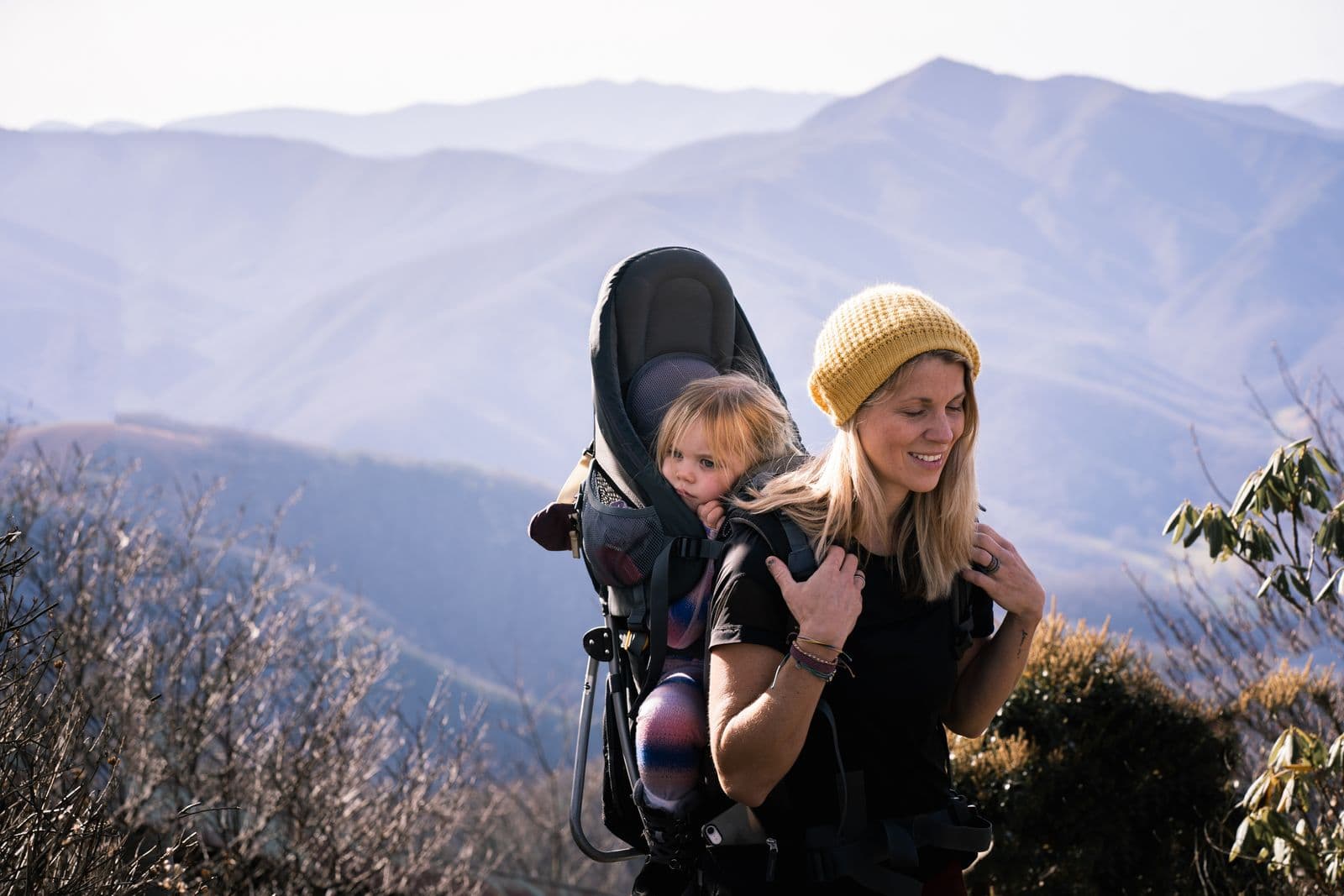
The Best Baby Carriers for Hot Weather, and What 'Breathable' Actually Means
Four carriers judged on airflow, panel material and how much fabric touches skin, for parents babywearing through a real summer.
- Editor, gear and the arithmetic of a small home
- Aug 31, 2026
- Updated Oct 8, 2026
- 12 min read
4 products compared

In this guide
A carrier that felt fine in a climate-controlled living room in March is a different product outside in July. Two bodies generate heat against each other through a layer of padded fabric, and a baby cannot regulate that heat the way an adult does. The complaint that shows up hardest in summer owner reviews is not comfort or price. It is a sweat-soaked back panel, a flushed baby, and a carrier that gets left in the closet from June through August.
"Breathable" on a product listing is doing a lot of unearned work. It can mean an open-cell mesh panel that a fan of air actually moves through, or it can mean a slightly thinner version of the same cotton twill everyone else uses. The four carriers below are chosen and ranked for what is actually true about their panel construction, not what the packaging claims.
What actually decides this
Mesh is a specific material, not a marketing word. True airflow mesh is an open-weave synthetic that lets air pass through the panel itself, the way a running shoe's upper does. It looks different from a solid panel with ventilation holes punched into it, and it feels different in ten minutes of wear. Read the material description, not just the word "breathable" in the title.
Contact area matters more than fabric weight. A carrier's total surface area against two bodies is the real heat driver. A narrower panel with more waist and shoulder padding traps less heat overall than a wider panel in a lighter fabric, even when the lighter fabric sounds cooler on paper.
Infants regulate heat less efficiently than older children or adults. A baby's surface-area-to-body-mass ratio is higher, and sweating and vasodilation, the two mechanisms that let an older body dump heat, are less developed in the first year. That is the physiological reason a carrier that merely feels warm to the wearer can be doing more to the baby.
A dark, non-mesh carrier in direct sun is the worst combination this category produces. Dark synthetic fabric absorbs radiant heat, and a built-in sun hood that also functions as a heat trap when it is not shading anything is a common design miss. Light colors and a hood you can fully remove or roll away both help.
The picks
$156.74
Price checked Oct 8, 2026
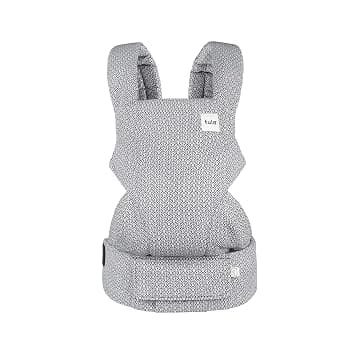
Baby Tula Explore Mesh
Tula's Explore Mesh leads this guide because it pairs a mesh weave body panel with no infant insert, so less fabric sits between two bodies in the heat. It is built specifically for the summer market rather than adapted from a cold-weather model, and the wearer range from extra-small to 4X is the widest in this lineup by a real margin. For a household where two very different-sized adults are sharing one carrier through a hot season, that range does more for practicality than any single spec here.
We may earn a commission on this link. It never changes the ranking.
- Panel material
- Breathable mesh weave
- Weight range
- 7 to 45 lbs
- Wearer range
- XS to 4X
- Hip certification
- International Hip Dysplasia Institute
What works
- Certified hip-healthy by the International Hip Dysplasia Institute, so the ergonomic seat is not a marketing claim without backing
- No infant insert needed across the full 7 to 45 pound range, which is one less piece of extra fabric against a baby's body in summer
- XS to 4X wearer range is the widest of the four, genuinely useful for co-parenting households
- Padded shoulder straps and a wide waistband keep the lumbar support a mesh build sometimes sacrifices
What to know
- The most expensive carrier in this guide, at more than twice the price of the Momcozy
- Machine washing a mesh weave this fine takes more care than a cotton twill carrier
- No back-carry position at the smallest end of the weight range
$87.49
Price checked Oct 8, 2026
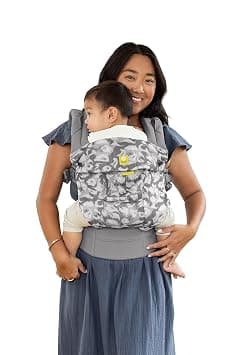
LÍLLÉbaby Complete Airflow
The Complete Airflow is a 6-in-1 design, and its six positions, outward-facing among them, are the most of any carrier here. Outward-facing is contested among babywearing educators for older infants because it changes hip positioning and reduces the baby's ability to turn away from overstimulation, so treat it as a situational option rather than the default, and use the inward positions for most of a hot-weather outing.
We may earn a commission on this link. It never changes the ranking.
- Panel material
- Airflow mesh ventilation panel
- Weight range
- 7 to 45 lbs
- Positions
- 6, including outward-facing
- Best for
- Budget-conscious multi-position use
What works
- Six carry positions, including inward and outward facing, cover more configurations than any other carrier in this guide
- Lumbar support pad reduces strain on long summer walks
- Cheapest of the multi-position structured carriers here apart from the Momcozy, and it carries twice the Momcozy's carry positions
What to know
- Outward-facing position is not recommended for extended wear and is a minority use case among babywearing safety educators
- Airflow mesh is a ventilation panel rather than the mesh weave construction of the Tula
- More buckles and adjustment points than a simpler 4-position carrier, which adds a small learning curve
$99.99
Price checked Oct 8, 2026
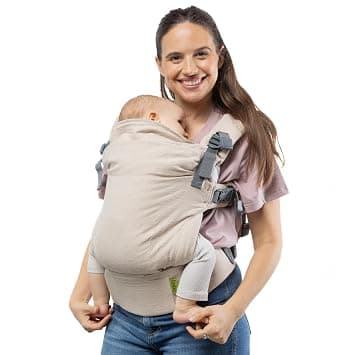
Boba X
Boba built the X around a breathable linen blend rather than mesh, which is a genuinely different approach to the same problem: a natural-fiber weave that wicks moisture instead of relying on an open synthetic weave for airflow. The 25 to 58 inch waistband is the widest range in this guide, which makes it a real option for plus-size and petite wearers alike rather than an afterthought.
We may earn a commission on this link. It never changes the ranking.
- Panel material
- Breathable linen blend
- Weight range
- 7 to 45 lbs
- Waist range
- 25 to 58 inches
- Hip certification
- Certified hip-healthy
What works
- Linen blend wicks moisture rather than only allowing airflow, which behaves differently in humid heat than dry mesh
- 25 to 58 inch waistband is the widest fit range of the four carriers here
- Certified hip-healthy, with a fully adjustable seat rather than fixed sizing
- Micro-adjustable straps avoid the buckle-hunting some structured carriers require
What to know
- Linen wrinkles and shows wear faster than a synthetic mesh weave
- Less airflow than true open-cell mesh in still, humid air with no breeze
- Newer product line with a shorter owner-review history than the Tula
$67.99
Price checked Oct 8, 2026
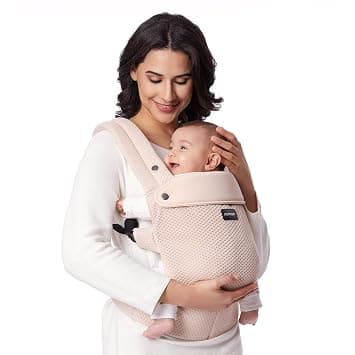
Momcozy PureHug
At under seventy dollars, the PureHug is less than half the price of the Tula and still uses an air-mesh panel with a separate neck-contact cooling fabric rather than a single warm layer. The X-shaped back strap design is a genuine departure from the standard H-shape and distributes weight differently, which owner reports describe as noticeably less shoulder strain on long wears. It will not match the premium carriers on refinement, but for a family testing whether babywearing suits them before spending more than a hundred and fifty dollars, this is the honest budget entry.
We may earn a commission on this link. It never changes the ranking.
- Panel material
- Air mesh with neck-contact cooling fabric
- Weight range
- 7 to 45 lbs
- Strap design
- X-shaped back
- Hip certification
- IHDI hip-healthy
What works
- Air mesh panel plus a separate neck-contact cooling fabric, addressing the specific spot where heat concentrates
- IHDI hip-healthy positioning across three adjustable sizing stages
- X-shaped strap design distributes weight across the back differently than the standard H-shape, reducing shoulder pressure
- Least expensive carrier in this guide by a clear margin
What to know
- Newer brand with a shorter track record than Tula, LÍLLÉbaby or Boba
- Build quality and stitching are a step behind the premium carriers on close inspection
- Fewer carry positions than the LÍLLÉbaby
The comparison, in one table
| Carrier | Price | Panel material | Wearer range | Positions |
|---|---|---|---|---|
| Baby Tula Explore Mesh | $156.74 | Breathable mesh weave | XS to 4X | 3, no insert needed |
| LÍLLÉbaby Complete Airflow | $87.49 | Airflow ventilation panel | Standard adjustable | 6, incl. outward-facing |
| Boba X | $99.99 | Breathable linen blend | 25 to 58 in waist | Front and back |
| Momcozy PureHug | $67.99 | Air mesh + cooling fabric | 3 sizing stages | 3 |
Who each one is wrong for
The Tula Explore Mesh is wrong for a single wearer of average size who does not need the extended fit range, since that range is the feature carrying most of its price premium over the Momcozy. It is right for households where two adults of very different builds are sharing one carrier.
The LÍLLÉbaby Complete Airflow is wrong for a parent who plans to use the outward-facing position for long stretches, given the hip-positioning concerns babywearing educators raise about that carry. It is right for the price-conscious buyer who wants the most carry-position flexibility on offer.
The Boba X is wrong for very humid, still climates where linen's wicking advantage matters less than an open mesh weave's raw airflow. It is right for a dry-heat climate and for wearers at either end of the size range other carriers do not fit well.
The Momcozy PureHug is wrong for a family that wants the refinement and longevity track record of an established brand. It is right for a first carrier, or a second carrier bought specifically to survive summer without retiring the primary one to the closet.
Reading a "breathable" claim on any carrier
Three questions separate a real mesh carrier from a marketed one. Does the material description use the word mesh, and does a photograph show visible open weave rather than a solid panel with punched holes? Does the mesh cover the torso panel where the two bodies actually touch, or only a strip at the edges? And does the specification mention a wearer-facing airflow feature at all, or is "breathable" appearing only in the title and nowhere in the actual materials list? A listing that fails all three is describing an ordinary carrier with a warm-weather name.
Questions people actually ask
Is mesh actually cooler than cotton for babywearing?
Open-cell mesh allows air to pass through the panel itself, which cotton twill does not, so yes, in direct comparison mesh moves more air across the contact area. A linen blend, like the Boba X, is a different mechanism: it wicks moisture rather than allowing airflow, and both approaches outperform a solid synthetic panel.
How do I know if my baby is overheating in a carrier?
Watch for flushed or red skin, unusual fussiness, sweating at the neck or hairline, or skin that feels hot rather than warm to the touch at the trunk and neck. Take the baby out, move to shade, offer a feed and let both of you cool down. This is a comfort and hydration concern for a healthy full-term infant rather than a medical emergency, but persistent symptoms are a reason to call a pediatrician.
Should I put sunscreen on a baby under six months for a carrier walk?
The safest approach for infants that young is shade and clothing coverage rather than sunscreen, since sunscreen is generally not recommended on very young infants outside limited exposed areas. A carrier's own hood, a hat, and timing walks outside peak sun hours do more of the work than a topical product at that age.
Does a mesh carrier work for a newborn under 7 pounds?
All four carriers here start at a 7 pound minimum, which most full-term newborns clear at birth, but a smaller or premature infant needs an infant insert or a different carrier shape entirely. Check the specific weight minimum against your baby's actual weight rather than assuming full-term size.
Is a wrap cooler than a structured mesh carrier?
Usually not. A stretchy wrap uses several layers of fabric wound around the torso, which traps more heat against the body than a single mesh panel does, even though the fabric itself is thin. For genuinely hot weather, a structured mesh or linen carrier outperforms a wrap on airflow.
Where this fits in the rest of the carrier decision
The four carriers above assume the structured buckle format has already won the argument against a stretchy wrap for your household; if that decision is still open, wrap, soft carrier or structured pack covers which format suits which stage. If a bad back is the constraint that matters more than the season, choosing a carrier when your back is already bad covers load transfer in more depth than fits here. The hip-healthy language on three of the four products above is explained in full in hip-healthy carrier claims, including what the certification does and does not test.
The general buying guide for the category, covering newborn-to-toddler stage rather than climate, is the best baby carriers roundup, and it is worth reading alongside this one since three of its five picks are cold-weather-neutral choices rather than summer-specific. A carrier is also one half of a two-product plan with a stroller for most families; the stroller guide covers the other half.
Sources
As an Amazon Associate we earn from qualifying purchases. We earn a commission on some links, at no extra cost to you. It never changes which products we recommend or the order they appear in. Full disclosure
Who wrote this
Editor, gear and the arithmetic of a small home
Marisa Okonkwo edits BabyGearSearch and writes the hardware half of it: strollers, car seats, carriers and the furniture around them. She reads the specification sheet, the fit list and the returns policy in full before she reads a single review, because the difference between two apparently identical strollers is almost always a number one of them declines to publish.
More from MarisaThe standard
How this guide was built
- Manufacturer specification sheets and warranty terms, read in full rather than summarised from a listing.
- The federal safety standard the product is certified to, plus anything NHTSA, the AAP or the CPSC has published on it.
- Owner reports at volume, including the one-star reviews, which is where failure modes live.
- Every price checked against the live listing on the date printed beside it.