The Best Baby Carriers, Ranked by How They Feel at Month Four
Five carriers judged on back comfort, learning curve and hip position, because the one you buy for a newborn is rarely the one you keep.
- Editor, gear and the arithmetic of a small home
- Aug 12, 2026
- 12 min read
5 products compared

In this guide
Carriers are bought for a newborn and judged by a four-month-old. That gap explains almost every disappointed review in the category. A stretchy wrap that felt perfect around a seven-pound newborn starts to sag under fourteen pounds, and the parent who was told wrapping was easy is now standing in a hallway with nine feet of jersey and a crying baby.
The honest version of this guide is that most families end up owning two carriers, and that this is fine. What matters is knowing which one you are buying and why. Five carriers below, sorted by the stage and the body they suit.
What actually decides this
Your back, before anything else. A wrap distributes weight across your whole torso and has no waistband. A buckle carrier moves weight onto your hips through a padded belt. If you have any history of back trouble, the waistband is not a luxury and a wrap will get uncomfortable faster than the marketing suggests.
The learning curve is real. Wrapping is a skill. Owner reviews split cleanly into people who watched the videos twice and love it, and people who tried it once in a car park and never again. A buckle carrier has no learning curve worth the name. That is the entire trade.
Hip position. The International Hip Dysplasia Institute's guidance is consistent across every carrier type: the baby should sit with thighs supported and knees higher than the bottom, in the shape people call the M-position. A carrier that lets the legs dangle straight down from the crotch is the wrong shape at any price.
How hot you run. Carriers are worn against the body for an hour at a time. Layered jersey wraps are warm. Woven and mesh buckle carriers are not. In a hot climate this decides more purchases than any comfort spec.
The picks
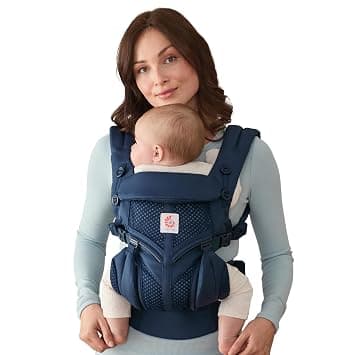
$179.00
Price checked Aug 12, 2026
Ergobaby Omni Classic
A buckle carrier with a proper padded waistband, which is the feature that decides whether a carrier survives past month four. It costs more than a wrap and it will outlast three of them. If you buy one carrier for the whole of babyhood, buy this shape.
We may earn a commission on this link. It never changes the ranking.
- Type
- Buckle carrier with padded waistband
- Learning curve
- Minimal
- Stage
- Newborn settings through toddler
- Shared use
- Adjusts across body sizes
What works
- Padded waistband moves the load onto your hips instead of your shoulders and back, which is what makes long wears possible
- No wrapping technique to learn, so both parents will actually use it
- Adjusts across a wide range of body sizes, which matters when two adults share one carrier
- Woven construction breathes better than a layered jersey wrap in warm weather
What to know
- Bulkier to carry when not in use than a wrap, which folds to nothing
- More expensive than the wraps here
- Buckle carriers are less snug for a very small newborn than a wrap unless the insert or setting is right
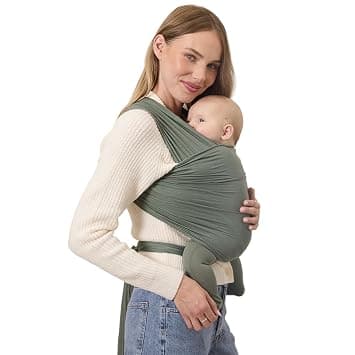
$74.00
Price checked Aug 12, 2026
Solly Baby Wrap
The best of the stretchy wraps and the right buy for the first three months, when a newborn wants to be held constantly and you want your hands. It is a single piece of soft fabric, it weighs nothing, and it is genuinely lovely to use. It will not carry a heavy baby comfortably, and it is not meant to.
We may earn a commission on this link. It never changes the ranking.
- Type
- Stretchy one-piece wrap
- Learning curve
- Real, video-assisted
- Stage
- Newborn to roughly 3 or 4 months
- Waistband
- None
What works
- Nothing is as close or as snug for a newborn, which is the whole point in the fourth trimester
- Weighs nothing and packs into a nappy bag, so it is always with you
- Lightweight fabric is cooler than most stretchy wraps, which are usually the warmest carriers going
- Cheapest carrier here, though the Colugo is now within cents of it
What to know
- Wrapping is a skill and the first three attempts are frustrating without a video to hand
- No waistband, so all the load goes through your torso and shoulders
- Support falls off noticeably as the baby gains weight, commonly around month four
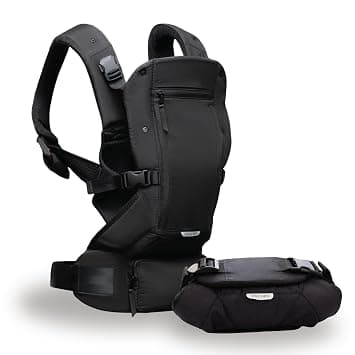
$74.25
Price checked Aug 12, 2026
Colugo The Baby Carrier 2
A structured buckle carrier for under seventy-five dollars, which is well under half what the premium brands charge for the same category. It does the job a buckle carrier exists to do, and the money you save is genuinely useful somewhere else in this shopping list.
We may earn a commission on this link. It never changes the ranking.
- Type
- Structured buckle carrier
- Learning curve
- Minimal
- Stage
- Newborn through toddler positions
- Value
- Well under half the premium price
What works
- Structured carrier with a waistband at well under half the usual price
- Multiple carry positions covering the newborn through toddler range
- Simple enough that a grandparent will put it on correctly without a tutorial
What to know
- Padding and adjustment range are a step behind the premium buckle carriers, which shows on wears over an hour
- Fabric is less breathable than the woven premium options in hot weather
- Fewer fine adjustments, so a large height difference between two wearers is more annoying to accommodate

$83.99
Price checked Aug 12, 2026
WildBird Aerial Buckle Wrap
A hybrid that answers the most common complaint in the category: it gives the snug, close feel of a newborn wrap with buckles instead of nine feet of fabric. For a parent who wants the wrap experience and has already decided they will not learn to wrap, this is the answer.
We may earn a commission on this link. It never changes the ranking.
- Type
- Buckle wrap hybrid
- Learning curve
- None
- Stage
- Newborn months
- Waistband
- Light
What works
- Buckles rather than wrapping, so there is no technique to learn and no fabric on the floor
- Close, snug newborn fit that a structured carrier cannot quite match at very small sizes
- Faster to put on one-handed than any wrap, which matters with a crying newborn
What to know
- Newborn-stage product, so it retires early like the wraps do
- More expensive than a plain stretchy wrap for a similar useful life
- Less adjustment range than a full buckle carrier, so sharing between very different bodies is harder
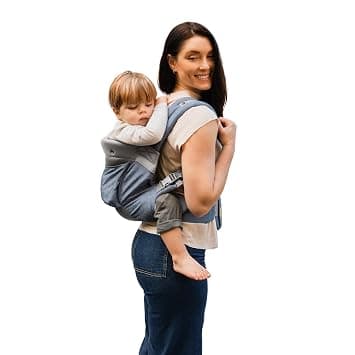
$109.99
Price checked Aug 12, 2026
LÍLLÉbaby CarryOn Airflow Toddler Carrier
The stage almost nobody plans for. Toddlers walk beautifully for half a mile and then stop, and a newborn carrier is the wrong size and the wrong support for a twenty-five pound child. A toddler-specific carrier is the difference between a day out and a carry home.
We may earn a commission on this link. It never changes the ranking.
- Type
- Toddler buckle carrier
- Stage
- Roughly 18 months and up
- Position
- Front and back carry
- Not for
- Newborns
What works
- Panel height and waistband are sized for a toddler rather than stretched to fit one
- Back-carry position takes the weight off your front, which is the only comfortable way to carry a heavy child
- Extends babywearing by a year or two rather than ending it at eighteen months
What to know
- A single-stage product, so it does nothing at all for a newborn
- Expensive for a stage some families skip entirely
- Bulky, which is a real cost if your carrier lives in a nappy bag
The comparison, in one table
| Carrier | Price | Stage | Waistband | Learning curve |
|---|---|---|---|---|
| Ergobaby Omni Classic | $179.00 | Newborn to toddler | Padded | Minimal |
| Solly Baby Wrap | $74.00 | Newborn to about 4 months | None | Real |
| Colugo The Baby Carrier 2 | $74.25 | Newborn to toddler | Yes | Minimal |
| WildBird Aerial Buckle Wrap | $83.99 | Newborn months | Light | None |
| LÍLLÉbaby CarryOn Airflow Toddler Carrier | $109.99 | 18 months and up | Padded | Minimal |
Who each one is wrong for
The Solly wrap is wrong for a bad back and wrong for a parent who knows they will not practise. It is right for the fourth trimester and for contact naps, and it is the cheapest way into babywearing.
The Ergobaby Omni is wrong for a family who only wants a carrier for the first eight weeks, because the wraps cost less than half as much and are snugger at that size. It is right for anyone who intends to still be carrying at a year.
The Colugo is wrong for a wearer who will do long walks in heat, where the premium woven carriers pull ahead on breathability and fine adjustment. It is right for everyone else, and it is the value pick here.
The toddler carrier is wrong for anyone whose child is under eighteen months, and it is genuinely unnecessary for families who drive everywhere. It is right for city families whose two-year-old still needs carrying home, which is more of us than expected it.
The two-carrier plan
If the budget allows two, the pattern that shows up most often in owner reports is a wrap for the first three months and a structured buckle carrier from month three onwards. That is roughly a hundred and fifty dollars for the Solly plus the Colugo, and it covers the whole range properly rather than compromising at both ends. If the budget allows one, buy the buckle carrier and accept that the newborn weeks will be slightly less snug, because a carrier that is uncomfortable at month five gets abandoned and a carrier that is merely adequate at week two does not.
Questions people actually ask
Wrap or buckle carrier for a newborn?
A wrap is snugger and cheaper for the first weeks, and a buckle carrier is more comfortable and lasts far longer. The families most satisfied in aggregated reviews own both, using the wrap for the fourth trimester and switching around month three when weight starts telling on the shoulders.
Will a carrier hurt my baby's hips?
Not if the positioning is right. The International Hip Dysplasia Institute asks for the thighs supported and the knees higher than the bottom, so the legs form an M rather than hanging straight down. Every carrier here can be set up that way. Narrow-base carriers that leave legs dangling are the shape to avoid.
How long can I wear a baby at a time?
There is no fixed limit, and comfort is the practical guide for a healthy full-term baby. Check the airway often, take the baby out for feeds rather than feeding in a slack carrier, and if your back is complaining that is information rather than weakness.
Can two adults share one carrier?
Buckle carriers yes, with adjustment, and it is worth checking the strap range if the two wearers are very different heights. Wraps are more forgiving because the length does the adjusting, but each wearer has to learn the wrap for themselves.
Is it worth buying second-hand?
Carriers hold up well and the used market is good value, with two checks. Inspect every buckle, seam and strap for wear before you use it, and look the model up in the CPSC recall database, since carrier recalls do happen and they are almost always about the same failure points.
Where a carrier sits in the rest of the kit
Six things are worth reading alongside the picks. Which format stops working when, since each is excellent for a window and mediocre outside it, is in wrap, soft carrier or structured pack. What decides load transfer, if your back is the binding constraint, is in choosing a carrier when your back is already bad. If the waistband itself doesn't reach around you, or runs out of adjustment before it's snug, that fit problem, separate from any of the picks above, is broken down in baby carrier fit for petite and plus-size parents. And what the hip-healthy badge actually means, according to the institute whose name is on it, is in hip-healthy carrier claims. And if a newborn is going in the carrier, the positioning checklist that matters more than any of the picks above is in newborn carrier safety and the TICKS rule. If the carrier you choose has a facing-out position, the age each brand sets for it, and why the hip institute would wait longer, is in when a baby can face out in a carrier.
Most families own a carrier and a frame and use each for a different kind of trip, which is the argument for reading the stroller guide alongside this one rather than instead of it. If the season you're buying for is the deciding factor, the best carriers for hot weather ranks panel materials the general picks above don't get into. A carrier is also the answer to the thing a car seat cannot do, which is move a baby any real distance once the car is parked, and the car seat guide covers where that boundary sits. If the carrier is being bought so somebody can put a baby down asleep, the surface it goes down on is the subject of the cribs and bassinets guide. If the carrier is coming secondhand, the label, the recall check and the seams to inspect first are covered in is a secondhand baby carrier safe. Once a child sits unassisted and the walks turn into trails, the framed packs and the federal standard they are sold under are compared in the best hiking baby carriers.
Sources
- WildBird carrier specifications (wildbird.co)
- Solly Baby wrap specifications (sollybaby.com)
- Colugo Baby Carrier 2 specifications (hicolugo.com)
- International Hip Dysplasia Institute babywearing guidance
- CPSC recall database
As an Amazon Associate we earn from qualifying purchases. We earn a commission on some links, at no extra cost to you. It never changes which products we recommend or the order they appear in. Full disclosure

Who wrote this
Editor, gear and the arithmetic of a small home
Marisa Okonkwo edits BabyGearSearch and writes the hardware half of it: strollers, car seats, carriers and the furniture around them. She reads the specification sheet, the fit list and the returns policy in full before she reads a single review, because the difference between two apparently identical strollers is almost always a number one of them declines to publish.
More from MarisaThe standard
How this guide was built
- Manufacturer specification sheets and warranty terms, read in full rather than summarised from a listing.
- The federal safety standard the product is certified to, plus anything NHTSA, the AAP or the CPSC has published on it.
- Owner reports at volume, including the one-star reviews, which is where failure modes live.
- Every price checked against the live listing on the date printed beside it.