When to Stop Swaddling, and What the Rolling Rule Actually Means
The AAP's cut-off for swaddling is a behaviour, not a birthday. What counts as the signal, why arms-out is not a loophole, and what a baby sleeps in next.
- Writer, standards and the recall record
- Sep 30, 2026
- 13 min read
In this guide
- The rule, in the AAP's own terms
- Why a swaddled baby on the stomach is the specific worry
- What "signs of trying to roll" looks like on the floor
- Arms-out is not a way to keep swaddling
- Weighted swaddles and sacks are a separate category
- What a baby sleeps in next
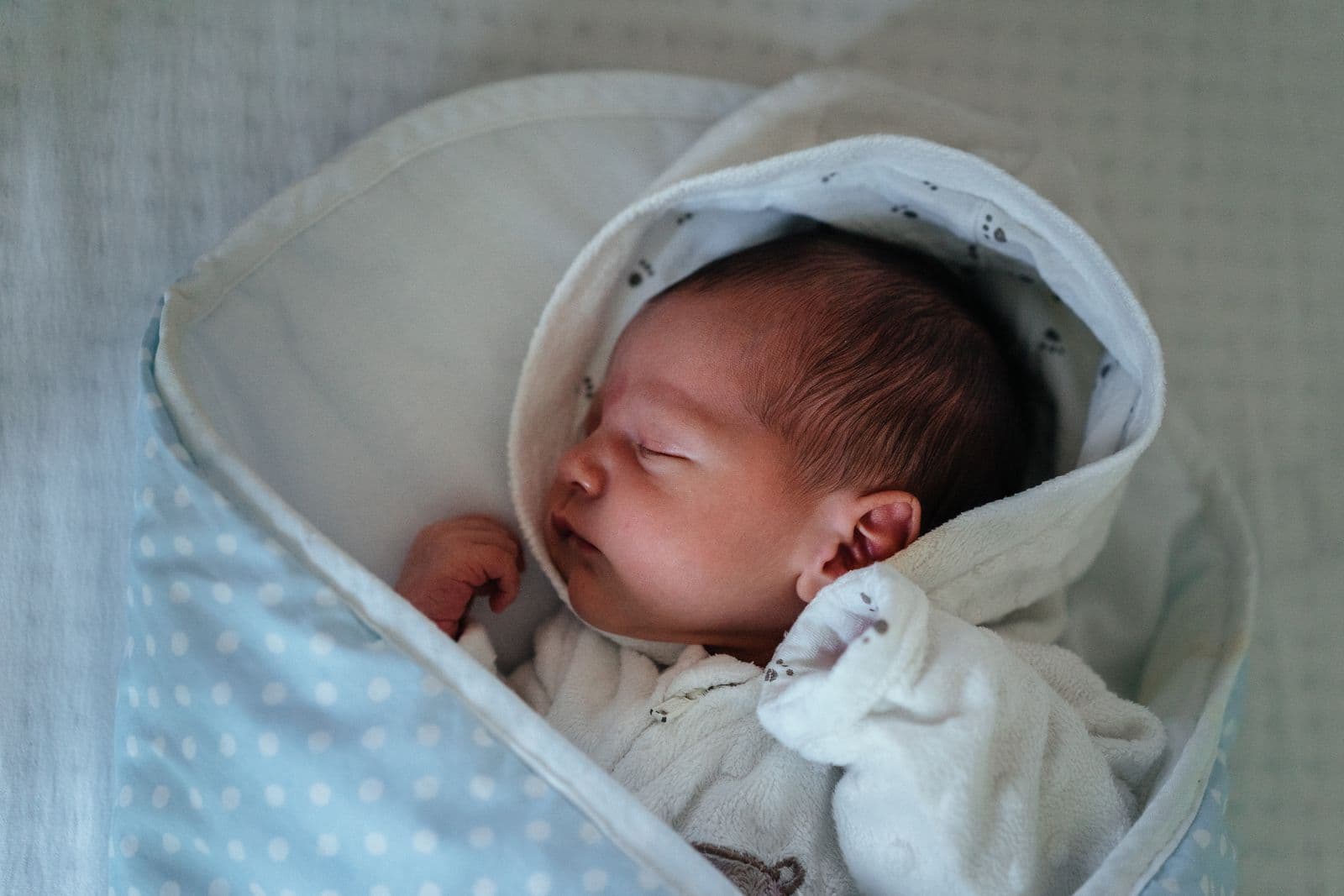
- Swaddling right while it still applies
- Why daycare may say no before you do
- Where this fits in the rest of the sleep space
- Sources
Most parents learn to swaddle from a nurse in the first forty-eight hours, and most of them are never told when to stop. The wrap works, the baby sleeps longer, and a technique that was taught as a newborn skill quietly becomes the household routine for months.
The question of when to stop has a precise answer, and it is not an age. The American Academy of Pediatrics ties the end of swaddling to a behaviour: the first signs that a baby is trying to roll. That rule is easy to state and surprisingly easy to misapply, because the products sold for the months after the newborn wrap are designed to blur exactly where the line sits.
The rule, in the AAP's own terms
The AAP's 2022 policy statement on sleep-related infant deaths says it plainly. When an infant exhibits signs of attempting to roll, swaddling is no longer appropriate, because it could increase the risk of suffocation if the swaddled infant rolls to the prone position, meaning face down. The same statement puts the usual timing at 3 to 4 months and adds that it may occur earlier.
HealthyChildren.org, the AAP's parent site, narrows that further in a piece co-written by Rachel Moon, the lead author of that policy statement. Stop swaddling as soon as your baby shows any sign of trying to roll over, it says, and some babies start working on rolling as early as 2 months.
Two things follow from the wording. The trigger is the attempt, not the achievement: a baby does not have to complete a roll for the rule to apply. And the trigger is individual. A calendar date on a product label, or a size range printed on the packaging, is not the same instruction and should not be read as one.
Why a swaddled baby on the stomach is the specific worry
The policy statement also says there is no evidence to recommend swaddling as a strategy to reduce the risk of sudden infant death. Swaddling is allowed as a calming technique, with conditions attached, and the conditions are where the risk sits.
The clearest numbers come from a 2016 individual-level meta-analysis in Pediatrics led by A.S. Pease of the University of Bristol, with Moon among the co-authors. The team screened 283 articles and found only 4 studies that met their criteria, which is itself a finding about how thin this evidence base is. Across those studies, the risk associated with swaddling varied sharply by sleep position. The pooled odds ratio for a swaddled baby placed on the stomach was 12.99. On the side it was 3.16. On the back it was 1.93.
The authors are careful about the limits. The studies were few and inconsistent, definitions of swaddling varied, and other known risks were hard to control for. They also reported limited evidence that the risk rose with age, with roughly a twofold risk in infants over 6 months. Their conclusion is the part that maps onto household practice: the advice to avoid front and side sleeping applies especially to swaddled babies, and an age after which swaddling is discouraged deserves consideration.
A baby who can put themselves on their stomach can no longer be relied on to stay where they were placed. With arms wrapped, that baby also loses the use of the hands for pushing up or turning the head clear. That combination is what the rolling rule exists to prevent.
HealthyChildren adds one more mechanism. Swaddling may decrease a baby's arousal, making it harder for them to wake, which is part of why it appeals to tired parents and part of why the AAP treats it with caution.
What "signs of trying to roll" looks like on the floor
Neither source gives a checklist, and it would be overreach to invent a clinical one here. In ordinary terms, the signal is a baby who starts rocking onto a shoulder or a hip, rather than lying flat and still, during floor time or in the crib. A baby who ends up on their side after being placed on their back has already answered the question.
Two practical points make this easier to catch:
Watch unswaddled time. Rolling attempts show up during awake time on a play mat long before they show up in a wrapped baby in the dark, because the wrap suppresses the very movement you are looking for. Floor time with arms free is where the early evidence appears.
Treat one sighting as enough. The rule is phrased around the first signs, not around a pattern. A single attempt is the cut-off, and waiting a week to be sure is waiting past it.
Arms-out is not a way to keep swaddling
The most common workaround is the transitional or convertible swaddle, a wrap or zip pod with detachable wings or sleeves so one or both arms can come out. It is often marketed as the bridge between swaddle and sleep sack. Whether it is a bridge depends entirely on what the rest of the product is doing.
HealthyChildren addresses this directly. It notes that there is no evidence either way on SIDS risk tied to arms swaddled in or out, and then draws the line by function rather than by name: wearable blankets or sleep sacks that compress the arms, chest and body should stop once a baby shows signs of starting to roll over. A product with both arms free but a tight band clamped around the chest is still a swaddle under that sentence. A sack with arms free and a loose body is not.
That gives a simple test for anything in the drawer after the rolling signs appear. Does it hold the torso firmly, the way a wrap does? Then it is finished. Does it hang loose, with arms out and room to kick? Then it is a sleep sack, whatever the packaging calls it.
The same logic covers heavily padded or puffy sleepsuits sold for the transition months. Read the manufacturer's own label for its stop condition, and apply the AAP's functional test on top of it, because the label is written by the seller and the policy is not.
Weighted swaddles and sacks are a separate category
Weighted sleep products are the one variation that the AAP policy statement singles out by name. It says weighted swaddle clothing or weighted objects within swaddles are not safe and are not recommended, and more broadly that weighted blankets, weighted sleepers and weighted swaddles should not be placed on or near a sleeping infant. HealthyChildren repeats the point, noting that such products can place too much pressure on a baby's chest and lungs.
On the federal side, CPSC Commissioner Richard Trumka Jr. issued a statement on 15 April 2024 quoting the agency's safe-sleep warning, "Don't use weighted blankets or weighted swaddles," and noting multiple infant deaths in these products. The same statement records that he had tried the previous autumn to start rulemaking on weighted infant products and could not get the support to do it. There is no federal standard that bans or governs them. So, as with the arms-out question, the absence of a rule is not a finding of safety, and what is on a retailer's shelf is not evidence either way.
What a baby sleeps in next
Once the swaddle is finished, the AAP's preference is clear. The 2022 statement says infant sleep clothing, such as a wearable blanket, is preferable to blankets and other coverings for keeping an infant warm, because it reduces the chance of the head being covered or of entrapment. HealthyChildren is explicit that sleep sacks which do not swaddle and allow the baby to move freely can be used as long as you want.
So the ordinary progression is short. Wrap or fastened swaddle while the baby is not yet showing rolling signs, then a plain wearable blanket with arms out and a loose body, sized so the neck opening cannot ride up over the face. Nothing else goes into the crib with either one.
Warmth is the other variable that changes at the switch. A baby who has been in a wrap plus a sleeper is losing a layer, and the instinct is to add something back. The layer rule and the TOG ratings used on sleep sacks are worked through in nursery temperature and overheating, and the short version is that the sack replaces blankets, it does not sit alongside them. HealthyChildren lists sweating, damp hair, flushed cheeks, heat rash and rapid breathing as signs that a swaddled baby may be too hot, and the same signs apply in a sack.
Swaddling right while it still applies
For the weeks when swaddling is still in bounds, the two sources agree on the technique.
Back only, every sleep. The AAP says that if an infant is swaddled, always place them on the back. HealthyChildren adds that a swaddled baby should be monitored so they do not roll over.
A thin blanket, and not too tight at the chest. HealthyChildren recommends a thin blanket only, and a wrap loose enough to fit two or three fingers between the baby's chest and the swaddle. A wrap that comes undone in the crib is a loose blanket, which is the thing the safe-sleep guidance excludes outright.
Loose at the hips. The AAP says swaddling should be snug around the chest but leave ample room at the hips and knees to avoid exacerbating hip dysplasia. The International Hip Dysplasia Institute puts the same point in positional terms: the legs should be able to bend up and out at the hips, and should not be wrapped straight down and pressed together. It adds a warning worth reading twice if you use a commercial swaddle pod, because even products with a loose leg pouch can confine the legs if they are tightened around the thighs. The same hip reasoning comes up with baby carriers, covered in what hip-healthy carrier claims mean.
Only on a surface built for sleep. A swaddle does not change what the baby lies on. The firm, flat, bare surface requirement applies unchanged, and the firmness test behind a compliant mattress is explained in what firm means on a crib mattress.
Why daycare may say no before you do
Parents are sometimes surprised to find that a child care centre will not swaddle at all. HealthyChildren explains the reasoning. Several caregivers mean variation in technique, and babies who are not usually swaddled react differently when first swaddled at an older age, which may make them harder to wake. A newborn at home and an older baby in a new setting with a different caregiver are not the same situation, and the policy difference follows from that rather than from a disagreement about the evidence.
If your baby starts child care around the rolling window, it is often the natural moment to make the switch at home as well, so the baby sleeps the same way in both places.
Where this fits in the rest of the sleep space
The swaddle is one piece of a sleep setup, and each of the others has its own rule. Whether the first months happen in a bassinet beside your bed or a crib in the nursery is compared in bassinet or crib for the first six months, and the full-size options that meet the federal crib standard are in the best cribs and bassinets. What federal law took off the market in 2022, and what is still on sale, is covered in what the Safe Sleep for Babies Act banned.
Questions people actually ask
At what age should I stop swaddling?
There is no fixed age. The AAP ties it to the first signs that a baby is trying to roll, which usually appear at 3 to 4 months but can come earlier, and HealthyChildren.org notes some babies start as early as 2 months. Stop at the first attempt, not after a completed roll.
Can I keep swaddling with the arms out once my baby starts rolling?
Not if the product still holds the chest and body firmly. HealthyChildren.org says wearable blankets or sleep sacks that compress the arms, chest and body should stop once rolling signs appear. A loose sleep sack with the arms free is fine to keep using.
How long can my baby use a sleep sack?
A sleep sack that does not swaddle and lets the baby move freely can be used as long as you want, according to HealthyChildren.org. The AAP prefers a wearable blanket over loose blankets for keeping an infant warm.
Are weighted sleep sacks or swaddles safe?
The AAP's 2022 policy statement says weighted swaddle clothing and weighted objects within swaddles are not safe and are not recommended, and that weighted blankets, sleepers and swaddles should not be placed on or near a sleeping infant.
Does swaddling cause hip problems?
Tight swaddling with the legs held straight and together is the concern. The AAP says to leave ample room at the hips and knees, and the International Hip Dysplasia Institute says the legs should be able to bend up and out. Ask your pediatrician about a specific baby's hips.
Sources
- AAP, Sleep-Related Infant Deaths: Updated 2022 Recommendations for Reducing Infant Deaths in the Sleep Environment
- HealthyChildren.org (American Academy of Pediatrics), Swaddling: Is it Safe for Your Baby?
- Pease AS, Fleming PJ, Hauck FR, et al. Swaddling and the Risk of Sudden Infant Death Syndrome: A Meta-analysis. Pediatrics, 2016, 137(6), e20153275
- International Hip Dysplasia Institute, Hip-Healthy Swaddling
- CPSC, Statement of Commissioner Richard Trumka, Beware: Weighted Infant Swaddles and Blankets Are Unsafe for Sleep (15 April 2024)
- CPSC recall database
As an Amazon Associate we earn from qualifying purchases. We earn a commission on some links, at no extra cost to you. It never changes which products we recommend or the order they appear in. Full disclosure
Who wrote this
Writer, standards and the recall record
Dan Whitfield writes the standards side of BabyGearSearch: what a certification actually covers, what the CPSC recall database says about a brand, and what the one-star reviews agree on six months in. He is not a clinician and does not write as one. His job is to read the standard rather than the marketing page, quote the real number, and name the limit the packaging skipped.
More from DanThe standard
How this guide was built
- Manufacturer specification sheets and warranty terms, read in full rather than summarised from a listing.
- The federal safety standard the product is certified to, plus anything NHTSA, the AAP or the CPSC has published on it.
- Owner reports at volume, including the one-star reviews, which is where failure modes live.
- Every price checked against the live listing on the date printed beside it.