Do You Need to Replace a Car Seat After a Crash?
NHTSA's five-part minor-crash test, why Clek, Graco and Chicco are stricter, and the state laws that make an insurer pay for the new seat.
- Editor, gear and the arithmetic of a small home
- Oct 7, 2026
- 14 min read
In this guide
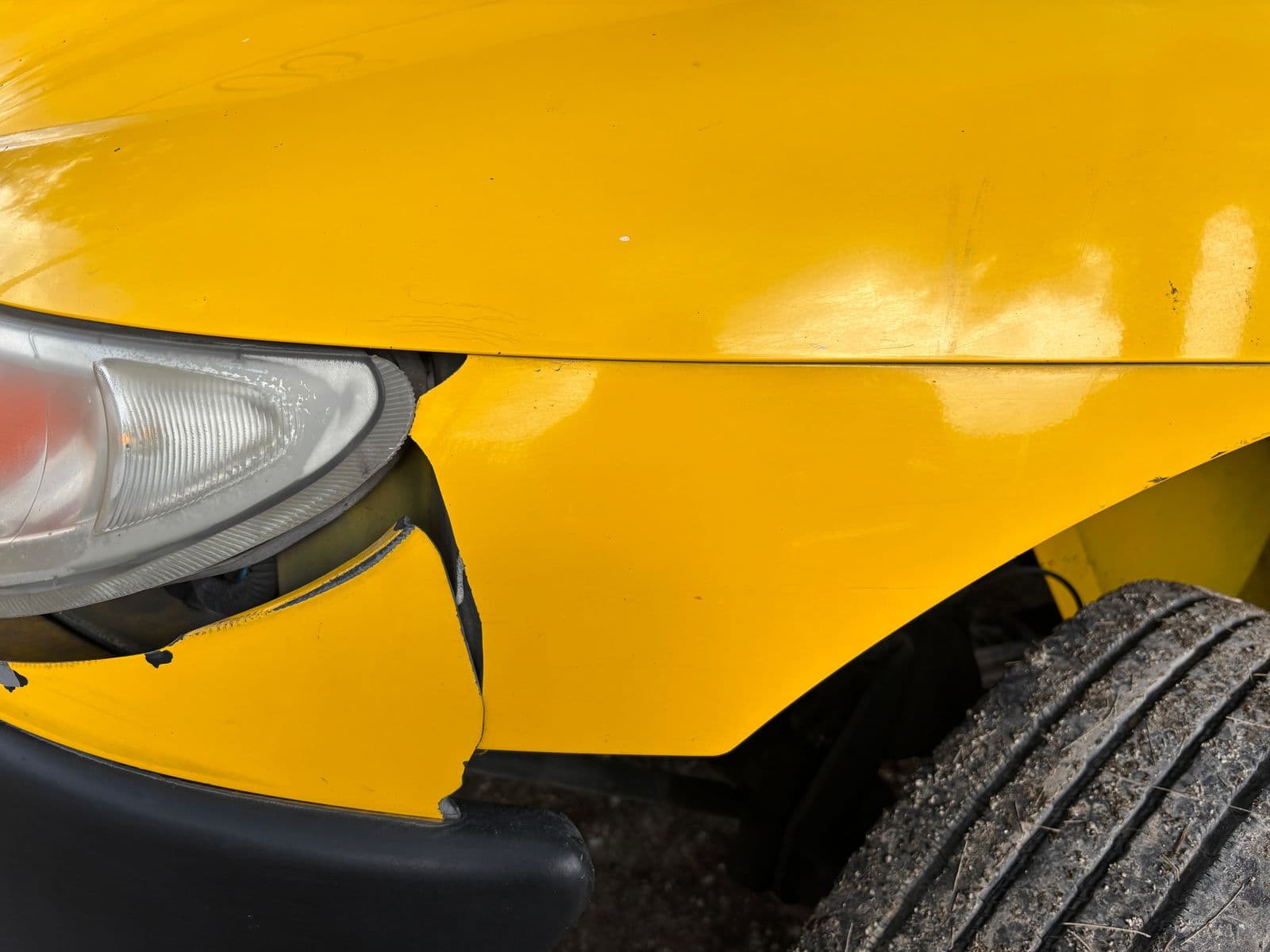
A low-speed bump in a car park leaves a cracked bumper, nobody is hurt, and the car drives home. The car seat in the back looks exactly as it did that morning. The question that follows is one of the most common a parent asks about car seats, and it has two answers that do not agree: the federal one, and the one printed in the manual for the seat you own.
The federal answer allows a seat to stay in service after some crashes. Several large manufacturers do not. When the two differ, the manual for your seat is the one that governs, and the reason is simple: the manufacturer certified that seat, wrote its warnings, and is the only party that can tell you what it considers a used-up seat. This guide sets out both answers, what each brand actually says, and the state laws that decide who pays for the replacement.
The federal answer: five conditions, all of them
The National Highway Traffic Safety Administration recommends that a car seat be replaced after a moderate or severe crash. It does not require automatic replacement after a minor one, and it defines minor narrowly. A crash counts as minor only when every one of these is true:
- The vehicle could be driven away from the crash site.
- The vehicle door nearest the car seat was not damaged.
- None of the passengers in the vehicle was injured.
- If the vehicle has air bags, none of them deployed.
- There is no visible damage to the car seat.
The wording is the same wherever it is reproduced. Britax prints it in its after-a-crash support page, Nuna prints it on page 10 of the PIPA lite series manual under the heading "Car Seat Use after a Crash" with the line "Information from nhtsa.gov", and both the Indiana University School of Medicine Automotive Safety Program and Children's Wisconsin publish it for families in the same five parts.
The word doing the work is "all". A crash that fails one condition is, for this purpose, a moderate or severe crash, however gentle it felt. The car was towed: replace. The rear door beside the seat is dented: replace. Someone was hurt, even slightly: replace. A side curtain air bag fired: replace. Any crack, dent or deformation on the seat: replace.
Two of the five catch people out.
The door nearest the seat. This is about which side of the car was hit, not how hard. A seat behind the driver in a crash that crumpled the driver's rear door fails this test, even if the front of the car is untouched and the car is drivable.
Visible damage to the seat. The fifth condition is the only one that asks you to inspect the seat, and it is also the weakest, because it only clears damage that can be seen. The brands that go further than NHTSA do so for exactly this reason, as their own words below show.
The manufacturer's answer, brand by brand
Every car seat manual carries a section on crashes. They split into two camps: brands that defer to NHTSA's five conditions, and brands that require replacement after any crash at all.
Clek: any collision, regardless of severity. Clek's accident replacement policy states that all Clek car seats must be replaced if they have been involved in a collision of any kind, regardless of the severity of the impact, because even minor collisions can cause structural damage that may not be visible. The policy adds that the same warning appears in each Clek manual, and it asks owners to contact customer support with the seat's model and serial number to report the collision. Clek also runs a recycling programme for the damaged seat.
Graco: the Extend2Fit manual says replace. The Graco Extend2Fit convertible manual puts it in a single warning: "If car seat is in a crash, it must be replaced. DO NOT use it again! A crash can cause unseen damage and using it again could result in serious injury or death." That manual does not offer the NHTSA minor-crash exception. Graco makes many seats and publishes a manual for each, so the manual for your specific model is the one to read, but the Extend2Fit text is unambiguous.
Chicco: any crash, and the base too. Chicco's guidance recommends replacing the seat after any type of crash, no matter how minor it may seem, and describes its approach as more conservative than NHTSA's. It goes further on three points that other brands leave unstated:
- Replace the seat even if no child was in it at the time of the crash.
- Replace the base as well, even if the base was in the car and not in use.
- Booster seats are included, on the same reasoning.
Chicco's explanation is that crash forces are absorbed mainly by the parts of the seat that hold it to the vehicle, whether that is the lower anchor connectors or the belt path, and that the harness, chest clip, buckle and shell can all be damaged in ways that cannot be seen.
Britax: follows NHTSA. Britax's after-a-crash support page says to stop using a seat immediately after a moderate or severe crash, and for minor crashes to refer to the NHTSA guidelines. It reprints the five conditions and closes with "Always follow the manufacturer's instructions."
Nuna: follows NHTSA. The Nuna PIPA lite series manual reprints the five conditions and states "NEVER use a car seat that has been involved in a moderate to severe crash", with a note to contact Nuna with questions about a specific seat.
The practical rule that follows from this is short. Find the crash section in the manual for the seat you own. If it says replace after any crash, the five-condition test does not apply to that seat. If it defers to NHTSA, the test applies, and every condition has to be met. If you no longer have the manual, the manufacturer publishes it as a PDF by model number, and the model number is on the seat's label.
Why a seat that looks fine can still be done
FMVSS 213, the federal standard every car seat sold in the United States is certified to, tests seats on a sled. The headline frontal test runs at a velocity change of 48 km/h, about 30 mph, and the seat must keep the test dummy within set limits for head excursion and injury measures. It is a certification test for seats as manufactured. Nothing in the standard describes how a seat should perform in a second crash after absorbing a first one, and that gap is the space the manufacturers' warnings fill.
The brands that require replacement after any crash say the same thing in different words. Clek says damage may not be visible. Graco says a crash can cause unseen damage. Chicco names the parts: the installation hardware, the harness, the chest clip, the buckle, the shell. None of them claims that every minor bump destroys a seat. What they say is that nobody outside a lab can tell which ones did, and they decline to certify the seat for further use on a visual check.
That is also why a second-hand seat with an unknown history is a poor bet, a point covered at more length in car seat expiration dates. The crash question is the one a stranger cannot answer for you.
Who pays for the new seat
The cost question is settled by law in some states and by policy wording everywhere else. Three state statutes put it in writing.
California. Insurance Code section 11580.011 requires every automobile liability policy to cover replacement of a child passenger restraint system that was damaged or in use by a child during an accident covered by the policy. Collision and physical damage policies must include the seat within covered property if it was in use by a child or was in the vehicle and sustained a covered loss. Uninsured motorist property damage coverage carries a matching requirement. When a claim is filed, the insurer has an obligation to ask whether a child restraint was in use or in the vehicle, and to replace it or reimburse the cost of a new one.
Illinois. Section 143.32 of the Illinois Insurance Code (215 ILCS 5/143.32) requires an automobile insurance policy to include coverage for replacement of a child restraint system that was in use by a child during a crash to which coverage applies. Note the trigger: in use by a child.
Colorado. House Bill 25-1179 added section 10-4-644 to the Colorado Revised Statutes. An insurer must include the replacement cost of a child restraint system that is in the vehicle at the time of an accident to which the coverage applies, and on a claim it must ask the claimant whether a child restraint was in the vehicle. If one was, the policy pays to replace it or reimburses the cost. The act takes effect on January 1, 2026, and applies to policies issued or renewed, and claims filed, on or after that date. Colorado's trigger is wider than Illinois's: the seat only has to be in the vehicle.
Outside a state with a statute like these, replacement depends on the coverage that applies to the crash, and the Indiana University Automotive Safety Program notes that many insurers will replace a seat involved in a crash. Children's Wisconsin's advice is the same in practice: call the insurer and ask. Chicco notes that some insurers ask for documentation from the seat's manufacturer before paying, and that its owner's manuals carry the information an insurer typically needs.
What to record before the seat goes anywhere
Whether you are filing a claim or calling the manufacturer, both will want the same facts, and the seat itself is the evidence. Before you dispose of it:
- The model number and date of manufacture. FMVSS 213 requires every add-on seat to be permanently labelled with its model name or number and a "Manufactured in" month and year, and the recall-registration statement on the same label asks owners for exactly those two details.
- The serial number, if the brand uses one. Clek's policy asks for it when you report a collision.
- Photographs of the seat in the car, the label, and any marks on the shell or base.
- Which seat position it was in, and whether a child was in it. California's and Illinois's statutes turn on whether the seat was in use by a child, and Colorado's on whether it was in the vehicle, so the answer matters for the claim.
- The crash report or claim number.
- Whether the base was in the car, even unused, if your seat has one. Chicco treats the base as part of the replacement.
Then call the manufacturer and read them the facts. The phone numbers are in the manual, and a brand that defers to NHTSA's criteria can tell you whether your crash meets them for that model.
Disposing of the old seat
A crashed seat should not reach another family. Chicco's instruction is to cut the harness straps and write "Do Not Use" on the shell, then look for a recycling programme or a retailer trade-in event. Clek runs its own recycling programme for its seats. If neither is available, a disabled seat can go out with household rubbish.
Do not donate it, sell it, or leave it on the kerb. A seat in good-looking condition with its straps intact is exactly the seat a stranger will pick up and use.
Buying the replacement
A replacement is a new purchase with a new expiry date, so it is worth treating as one rather than buying the same model on reflex. Three checks are worth doing before you buy:
- Fit. If the old seat was a squeeze, the replacement is a chance to fix it. The measurements that settle this are in will a car seat fit my car.
- Certification. FMVSS 213a, the first federal side-impact standard for car seats, has a compliance date of December 5, 2026. What it changes and what it does not is in what FMVSS 213a changes.
- Stage. If your child is close to the old seat's height or weight limit, buying the next stage now saves a second purchase. The car seat roundup sorts the current picks by stage.
Then register the new seat. The FMVSS 213 statement on every seat reads, in part, "Child restraints could be recalled for safety reasons. You must register this restraint to be reached in a recall."
Questions people actually ask
Do I have to replace a car seat after a minor crash?
It depends on the seat. NHTSA does not require automatic replacement after a minor crash, defined as one where the car could be driven away, the door nearest the seat was undamaged, nobody was injured, no air bags deployed and the seat shows no visible damage. Some manufacturers, including Clek and Chicco, require replacement after any crash, and their manual governs their seat.
What if my child was not in the seat during the crash?
Chicco says to replace the seat anyway, because crash forces act on the seat whether or not a child is in it. Colorado's insurance statute covers a seat that was simply in the vehicle. Check your own manufacturer's position.
Does the base need replacing too?
Chicco says yes, even if the base was in the car and not in use at the time. For other brands, the crash section of the manual or a call to the manufacturer settles it.
Will my insurance pay for a new car seat?
In California, Illinois and Colorado a statute requires covered policies to pay for replacement, each with its own trigger. Elsewhere it depends on your policy, and many insurers will replace a seat involved in a crash if asked. Keep the model number, manufacture date and photographs for the claim.
Can I keep using the seat until the new one arrives?
If the crash was moderate or severe, or your manufacturer requires replacement after any crash, the seat is out of service from the moment of the crash. Arrange a replacement seat before the next journey rather than after it.
How do I dispose of a crashed car seat?
Cut the harness straps, write Do Not Use on the shell, and look for a manufacturer recycling programme or a retailer trade-in event. Never sell or donate a seat that has been in a crash.
Sources
- NHTSA, Car Seat Use After a Crash
- Britax, After a Car Crash FAQs
- Nuna, PIPA lite series instruction manual (PDF)
- Clek, Accident Replacement Policy
- Graco, Extend2Fit convertible car seat owner's manual (PDF)
- Chicco, Do I Need to Replace My Car Seat After a Crash?
- Indiana University School of Medicine Automotive Safety Program, Car seats involved in a crash
- Children's Wisconsin, Car Seat Use After a Car Crash
- eCFR, 49 CFR 571.213, Child restraint systems
- California Insurance Code section 11580.011
- Illinois General Assembly, 215 ILCS 5/143.32
- Colorado General Assembly, House Bill 25-1179 (enrolled)
As an Amazon Associate we earn from qualifying purchases. We earn a commission on some links, at no extra cost to you. It never changes which products we recommend or the order they appear in. Full disclosure

Who wrote this
Editor, gear and the arithmetic of a small home
Marisa Okonkwo edits BabyGearSearch and writes the hardware half of it: strollers, car seats, carriers and the furniture around them. She reads the specification sheet, the fit list and the returns policy in full before she reads a single review, because the difference between two apparently identical strollers is almost always a number one of them declines to publish.
More from MarisaThe standard
How this guide was built
- Manufacturer specification sheets and warranty terms, read in full rather than summarised from a listing.
- The federal safety standard the product is certified to, plus anything NHTSA, the AAP or the CPSC has published on it.
- Owner reports at volume, including the one-star reviews, which is where failure modes live.
- Every price checked against the live listing on the date printed beside it.